DJI M400 vs DJI M350 RTK
In-depth comparison between the DJI M400 and DJI M350 RTK drones. Explore the key features of both drones and find out about the M400's key upgrades.

For half a decade, the DJI M300 Series has been championed as DJI's flagship enterprise drone - starting with the revolutionary M300 RTK in 2020, and followed by the upgraded M350 RTK in 2023.
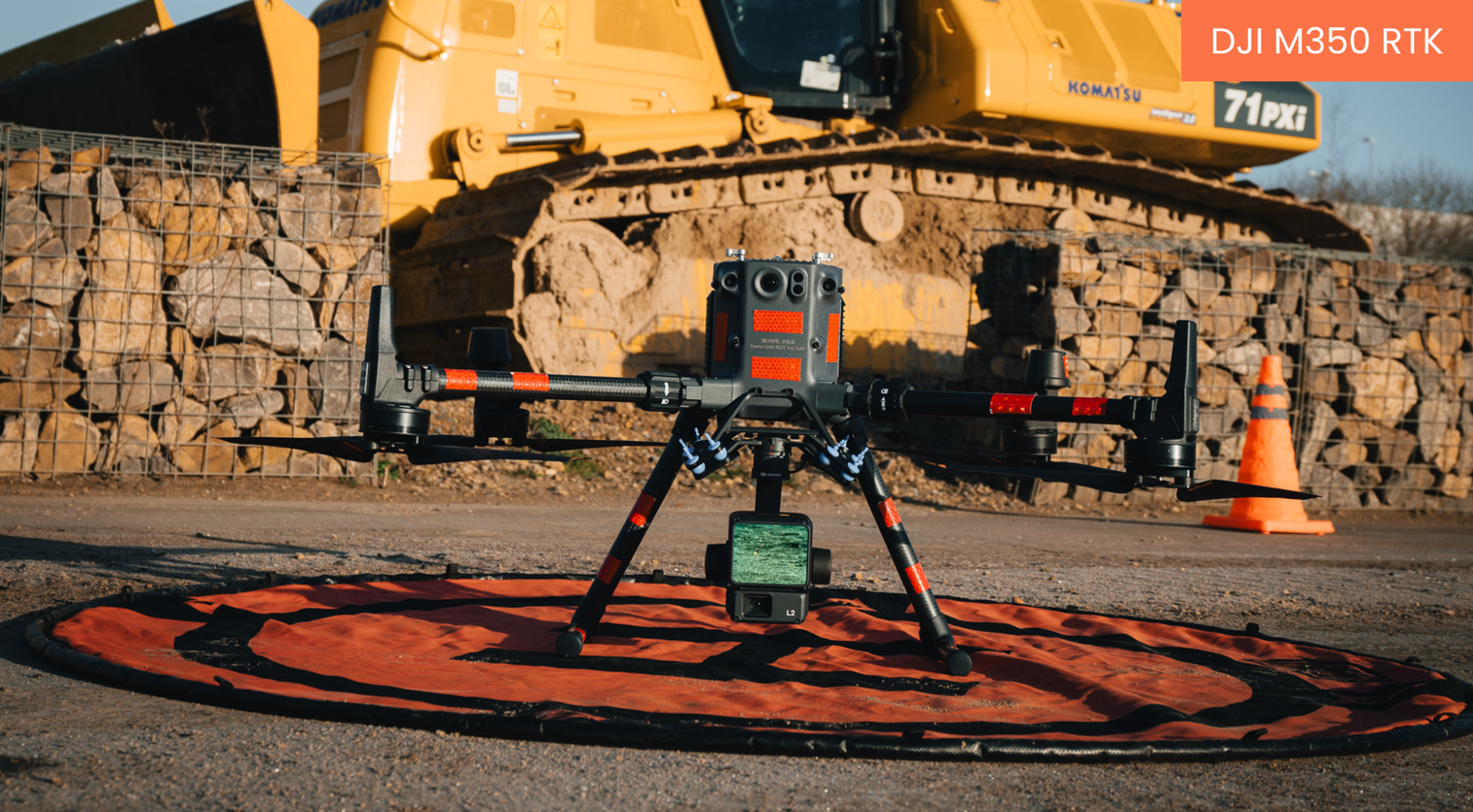
With its versatility, stellar payload suite, weather-proof design, intelligent modes, and safety features - this innovative drone family changed the face of commercial drone applications.
Now, DJI has upped the game once again, setting a new standard with the launch of the DJI M400.
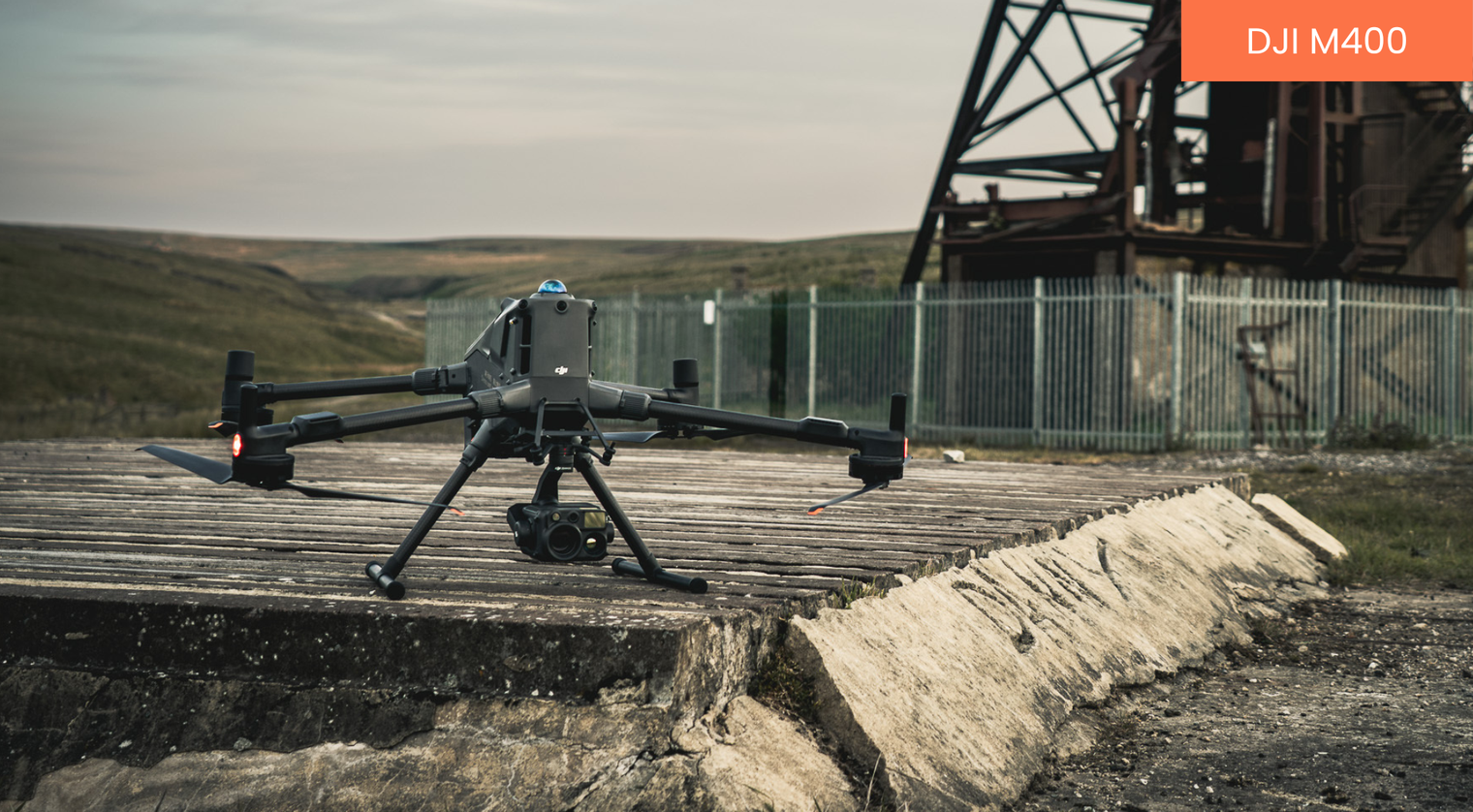
This impressive platform is the M300 Series on steroids!
Indeed, the Matrice 400 is a long-endurance drone platform packing even greater capabilities - from power-line-level obstacle sensing, through to longer flight time, an increase in the maximum payload weight it can carry, and the ability to fly with more payloads in one go (up to 7!).
It takes all that was good with the M300 Series and innovates once again.
In this blog, we'll explore the key differences between the M400 and the M350 RTK - and why you should add the M400 to your workflows.
DJI M400 vs DJI M350 RTK: Key specs at a glance
This table provides an at-a-glance comparison of the key specs of the DJI M400 and DJI M350 RTK.
| DJI M400 | DJI M350 RTK | |
|---|---|---|
| Weight (with batteries and propellers) | 9,740±40g | 6,470g |
| Max takeoff weight | 15.8kg | 9.2kg |
| Flight time (with H30T) | 59 mins | 42 mins |
| Max speed | 25m/s | 23m/s |
| Max Payload | 6kg | 2.7kg |
| Payload capacity | 7 | 3 |
| IP rating | IP55 | IP55 |
| Operating temperature | -20°C to 50°C | -20°C to 50°C |
| Transmission | DJI 04 Enterprise Enhanced Transmission20km (CE) | DJI 03 Enterprise Transmission8km (CE) |
DJI M400 vs DJI M350 RTK: Design
Both aircraft are similar looking and it is clear that the M400 is part of the Matrice family.
However, there are some key changes.
For instance, the M400 is a heavier beast - tipping the scales at 9.7kg, compared to the M350's mass of 6.4kg.
However, with this weight packs some mighty power, and enables the Matrice 400 to carry more payloads and support a greater payload weight. We'll cover this in more detail later.
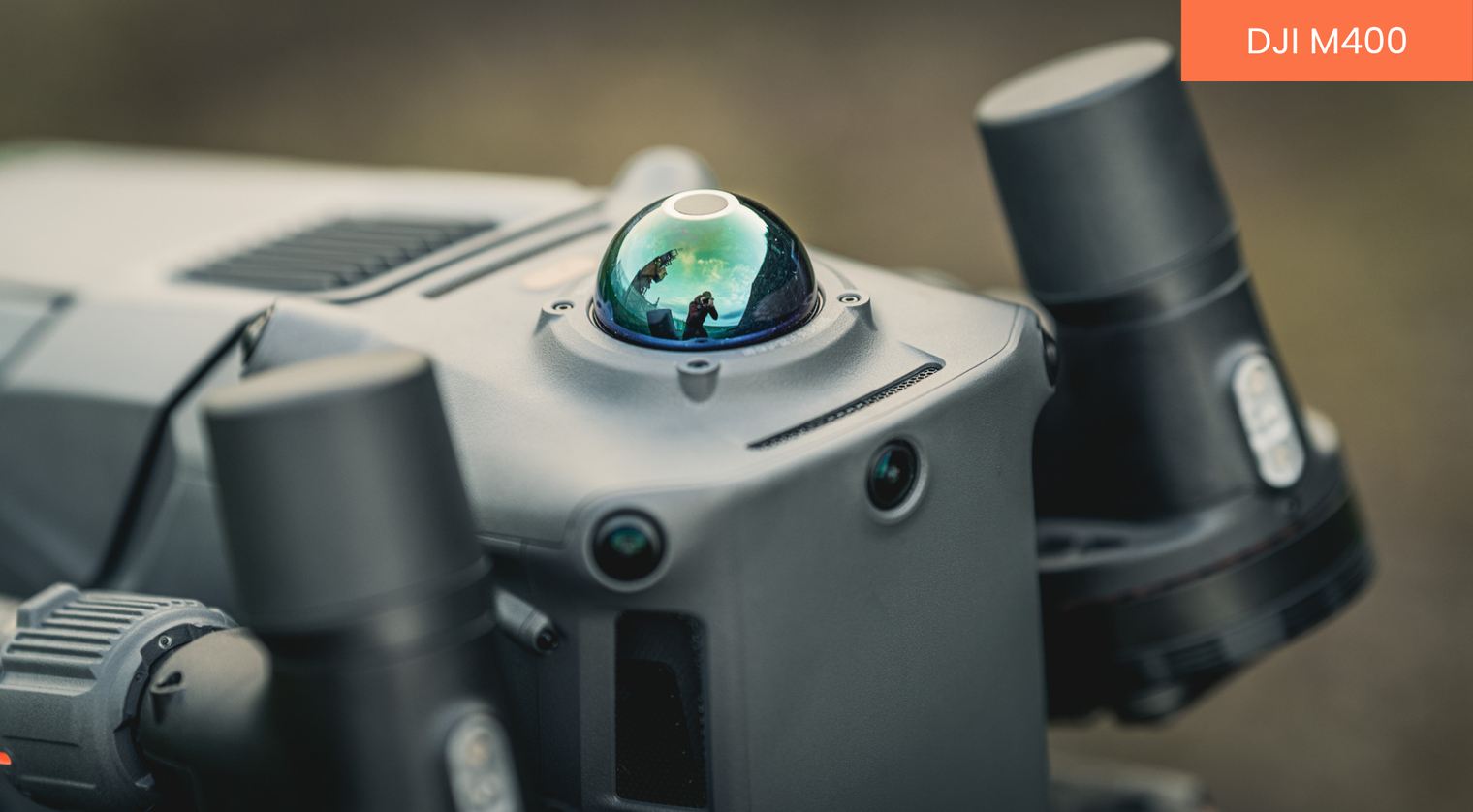
One of the key differences is the inclusion of the horizontal rotating LiDAR module at the top of the M400 - pictured below. This forms part of a suite of crucial sensing upgrades. Again, we'll cover this in more detail later.
The table below provides some key details about the design of the two aircraft.
| M400 | M350 RTK | |
|---|---|---|
| Takeoff weight (with propellers) | Without batteries: 5,020±20gWith batteries: 9,740±40g | Without batteries: 3,770gWith batteries: 6,470g |
| Dimensions (L x W x H) | Unfolded: 980 x 760 x 480mm (with landing gear)Folded: 490 x 490 x 480mm (with landing gear and gimbal) | Unfolded: 810 x 670 x 430 mm (without propellers)Folded: 430 x 420 x 430 mm (with propellers) |
| Diagonal wheelbase | 1070mm | 895mm |
| Ports | USB-C Debug Port x 1: USB 2.0E-Port V2 x 4: Lower part of the drone with 120W single-port powerCellular Dngle 2 interface x 2: Underside of the drone | E-Port V2 x 2: Upper part of the droneCellular Dongle 2 interface: Underside of the drone |
| Auxiliary light | 2 | 1 |
DJI M400 vs DJI M350 RTK: Payload capacity
One of the headlines of the DJI M400 is its ability to carry more payload weight (6kg vs 2.7kg), and the fact it can utilise up to 7 payloads at the same time - through a combination of downward gimbal configurations and 4 E-Port interfaces!
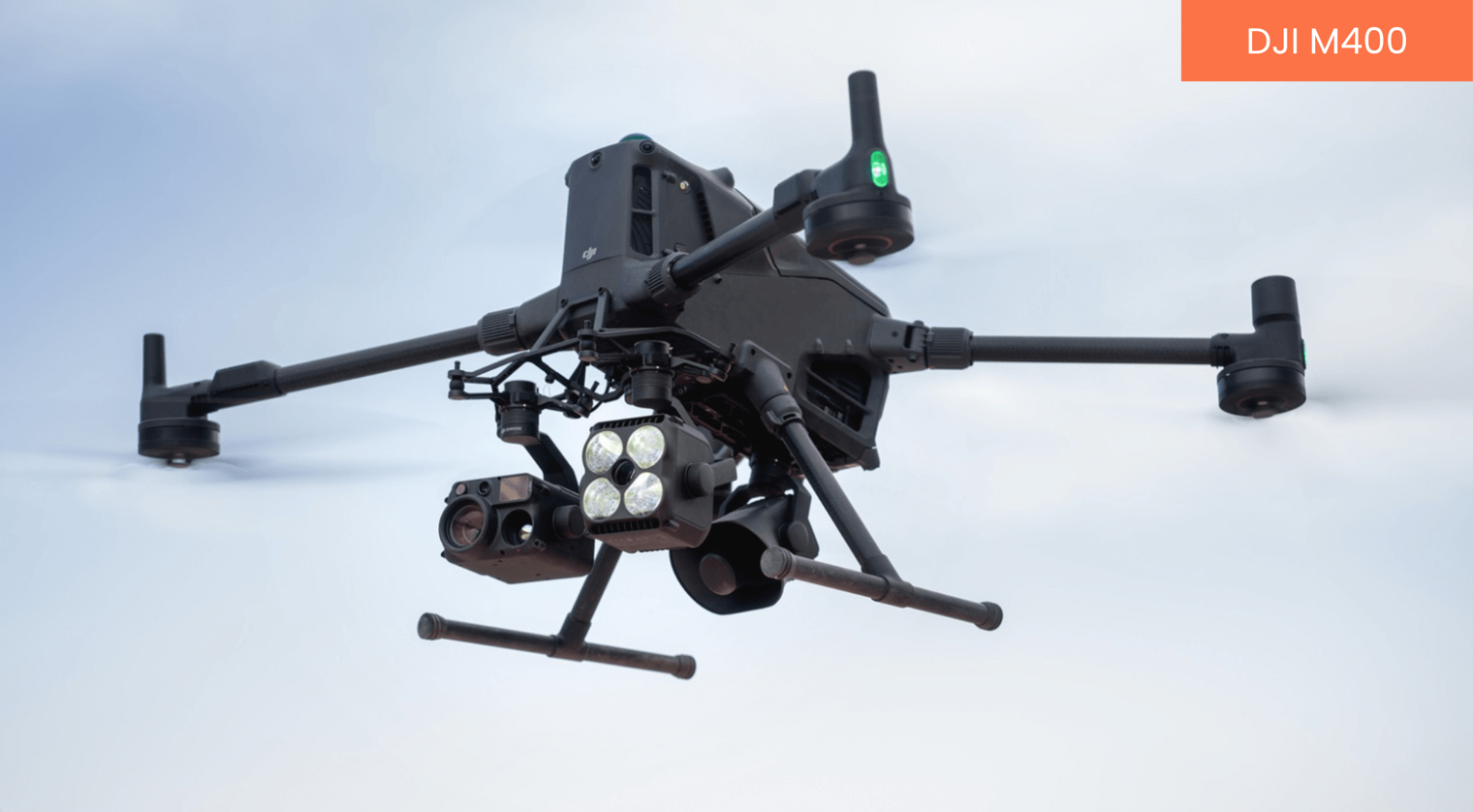
The M400 is compatible with the DJI M350 RTK's advanced payload suite, integrating with the DJI Zenmuse H30T and H30, the L2, P1, V1, and S1.
As an added bonus, the M400 can squeeze more out of these existing payloads, compared to the M350 RTK: ie, it can utilise Smart 3D Capture mode with the P1; and offers AI detection with the H30 Series (including thermal with the H30T).
On top of this, when deployed with the S1 spotlight, the M400 adds extra capability - as shown by this table.
| M400 | M350 RTK | |
|---|---|---|
| Low Beam | 20 lux | 13 lux |
| Full Beam | 40 lux | 35 lux |
| Auto Beam Alignment | Supported | Not supported |
| Grouped Control | Supported | Not supported |
| Remote Control | Supported | Not supported |
To further expand mission versatility, the M400 can integrate with third-party solutions. Although, it is worth noting that it is not compatible with legacy DJI payloads, such as the H20 Series and L1.
On top of this, M400 brings Manifold 3 to market - which is available separately and offers a high-performance onboard computing unit.
It means that, like the M350, the M400 is perfectly suited to a range of operations, from surveying through to public safety, inspection, and security.
| M400 | M350 RTK | |
|---|---|---|
| Max payload | 6kg | 2.7kg |
| Max takeoff weight | 15.8kg | 9.2kg |
| Max payload capacity | 7 | 3 |
DJI M400 vs DJI M350 RTK: Flight performance
The M350 RTK is a powerful platform with some top-notch performance features - and the M400 builds on this, with increased flight times, enhanced speed and agility, and bolstered transmission system.
Flight Time
When it launched, the M300 Series brought impressive endurance for a drone of its size.
But now, the M400 can stay airborne for longer, enabling operators to squeeze more out of every mission.
For instance, when used with the H30T, the M400 can stay airborne for 59 minutes, compared to the M350 RTK's 42 minutes.
The table below provides an overview of flight times when used with some of the payloads - as well as endurance for when the drones are stacked to maximum payload capacity.
| Payload | M400 | M350 RTK |
|---|---|---|
| P1 | 59 mins | 43 mins |
| L2 | 59 mins | 42 mins |
| H30T | 59 mins | 42 mins |
| Max payload capacity | 6kg = 31 mins | 2.7 kg = 32 mins |
Speed
Despite its larger footprint, the M400 manages to be a quicker and more agile drone.
| M400 | M350 RTK | |
|---|---|---|
| Max horizontal speed (at sea level, no wind) | 25m/s | 23m/s |
| Max ascent speed | 10m/s | 6m/s |
| Max descent speed | 8m/s | 5m/s |
Transmission
DJI M400 comes with an enhanced transmission system - supporting 20km video transmission (CE), sub-2G frequency bands, and an upgraded antenna system.
When compared to the M350 RTK, it means that its transmission range is more than double in CE regions, and has double the video transmission antennas.
The M400 also enables airborne relay - ideal for increasing operating distance.
| M400 | M350 RTK | |
|---|---|---|
| Transmission | DJI 04 Enterprise Enhanced Video Transmission System | DJI O3 Enterprise Video Transmission System |
| sub2G | Support | Not supported |
| Operating frequency and transmitter power (EIRP) | 900M, 1.4GHz, 2.4GHz, 5.2GHz, 5.8GHz | 2.4GHz, 5.2GHz, 5.8GHz |
| Max transmission distance | 40km (FCC)20km (CE/SRRC/MIC) | 20km (FCC)8km (CE/SRRC/MIC) |
| Antenna | WLAN Antenna x 8: 6 vertically polarised antennas and 2 horizontally polarised antennassub2G Antenna x 2: 2 vertically polarised antennas | WLAN Antenna x 4: 3 vertically polarised antennas and 1 horizontally polarised antennas |
| 4G dongle number | 2 | 1 |
| Airborne | Support | Not support |
Weather-resistance
Both drones are hardy, weather-resistant platforms - and in this department, they share the same specifications, as shown by the table below.
| M400 | M350 RTK | |
|---|---|---|
| IP rating | IP55 | IP55 |
| Operating temperature | -20°C to 50°C | -20°C to 50°C |
| Max wind speed resistance | 12m/s | 12m/s |
DJI M400 vs M350 RTK: Sensing
With its six-direction binocular vision system and infrared sensing system - the M350 RTK packs plenty of safety features.
But, as is the common theme - the M400 trumps it, further enhancing flight safety and reliability.
This platform is equipped with a triple sensing system, utilising full-colour fisheye vision sensors; LiDAR (including the horizontal rotating LiDAR at the top of the drone); and six-directional mmWave radar.
This trio provides M400 with power-line-level obstacle avoidance, and enables the drone to utilise these mechanisms in all conditions - essentially, providing 24/7 obstacle avoidance.
| M400 | M350 RTK | |
|---|---|---|
| Sensing system type | Omnidirectional binocular vision system (surround view provided by full-colour fisheye vision sensors)Horizontal rotating LiDAR, upper LiDAR, and downward 3D infrared range sensorSix-direction mmWave radar | Six-direction binocular vision system (black and white)Six-direction infrared sensing system |
| Power-line-level obstacle sensing | Supported | Not supported |
DJI M400 vs DJI M350 RTK: Intelligent features
The DJI M350 RTK has some impressive intelligent modes - but once again, the M400 builds on this feature deck and trumps its predecessor.
Some of the new features of the M400 include AI detection when paired with the H30 Series, including thermal AI detection with the H30T; AR projection, and Smart 3D Capture with the P1.
On top of this, the M400 is engineered to take-off and land from vessels - meeting the growing demand for maritime operations, and addressing some key challenges that currently exist with this type of mission.
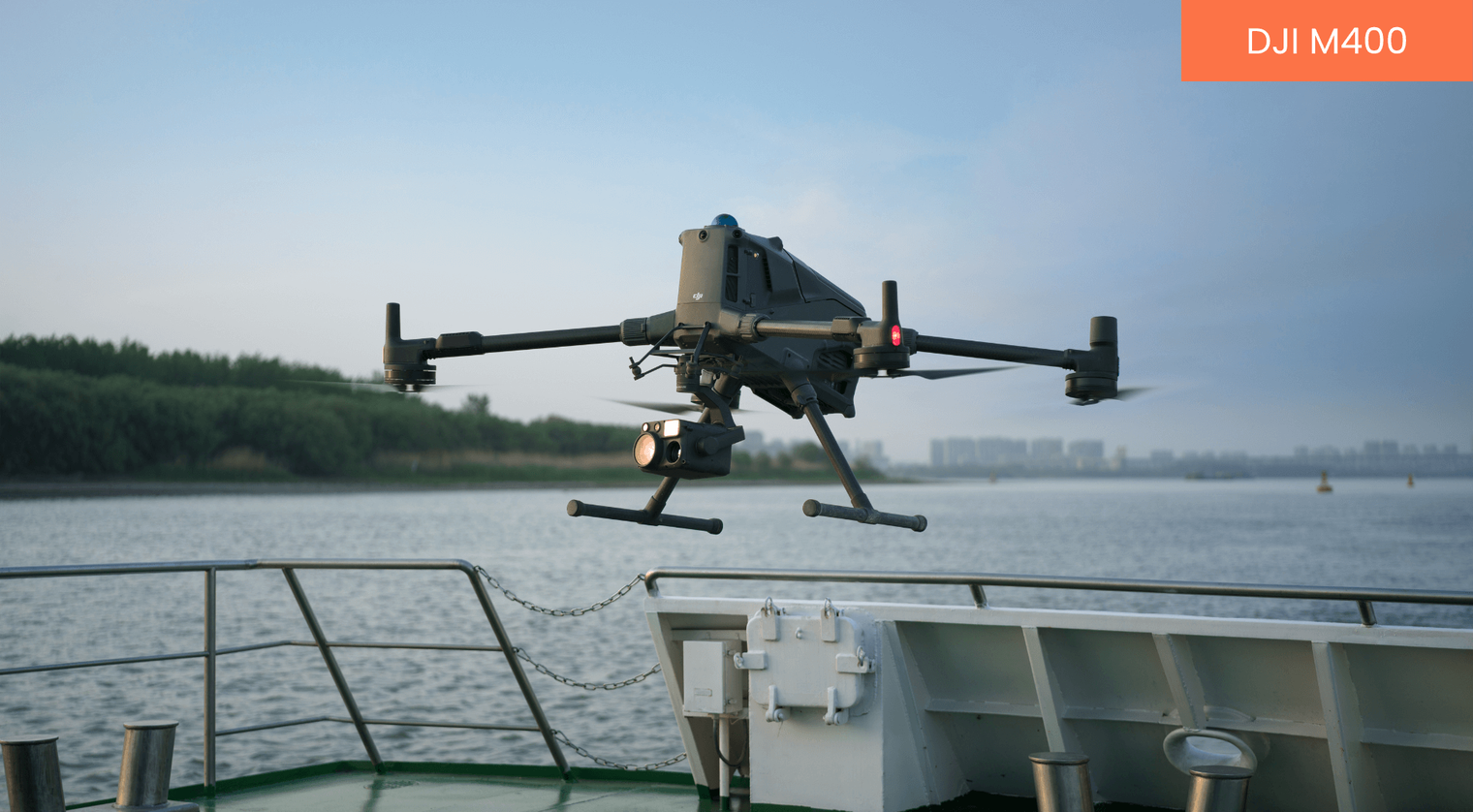
It means that the M400 brings with it even greater versatility and efficiency, and more convenient automated flight functions - such as enhanced route planning and terrain following, and capability for faster and more effective security and search and rescue missions.
The table below provides an overview of some of the new intelligent features supported by the M400.
| M400 | M350 RTK | |
|---|---|---|
| AI Detection | Supported | Not supported |
| AR Projection | Supported | Not supported |
| Real-time Terrain Follow | Supported | Not supported |
| Ship-based Auto-landing | Supported | Not supported |
| Crossing Power Line Follow | Supported | Not supported |
| Cruise, POI, FlyTo | Supported | Not supported |
| Smart 3D Capture | Supported | Not supported |
| Slope and Geometric Route | Supported | Not supported |
DJI M400 vs DJI M350 RTK: Accessories
The DJI M400 brings with it a stellar accessory ecosystem - including the new TB100 Intelligent Flight Battery, the BS100 Multifunctional Battery Station, and the TB100C tethered battery.
When it comes to batteries and charging, the M400's battery has a larger capacity for enhanced flight time, the battery station affords quicker charging speed, and compatibility with the tethered battery.
| M400 | M350 RTK | |
|---|---|---|
| Battery capacity | 20,254 mAh | 5880 mAh |
| Battery cell type | Li-ion 13S | Li-ion 12S |
| Battery energy | 977 Wh | 263.2 Wh |
| Battery cycle count | 400 | 400 |
| Tethered battery | Support | Not supported |
| Intelligent battery case - charging time | 220V: 45 mins (fast-charging mode)110V: 70 mins (fast-charging mode); 110 mins (silent mode) | 220V: 60 mins110V: 70 mins |
DJI M400 vs DJI M350 RTK: Summary
The DJI M300 family set the standard for commercial drone operations and has long been DJI's flagship enterprise drone.
Now, the M400 builds on this, and innovates further, heralding an exciting new chapter for the drone industry.
To add the M400 to your workflows, contact heliguy™.