Sectors / Security & Surveillance
Your perimeter, watched around the clock.
Autonomous drone surveillance that launches itself, patrols on schedule, flags what matters and lands again — no pilot on site. Built on DJI Dock 3, the Matrice 4TD and DJI FlightHub 2, then specified, supplied and supported by heliguy's UK enterprise team.
A dock sits on site. On a schedule — or the moment an alarm trips — the drone launches in about ten seconds, flies its route, and streams a live picture to your operators.
Then it lands and recharges itself, ready for the next sortie. Your team watches and dispatches remotely — the watch never stops, and no one stands at the fence line.
One system, many perimeters.
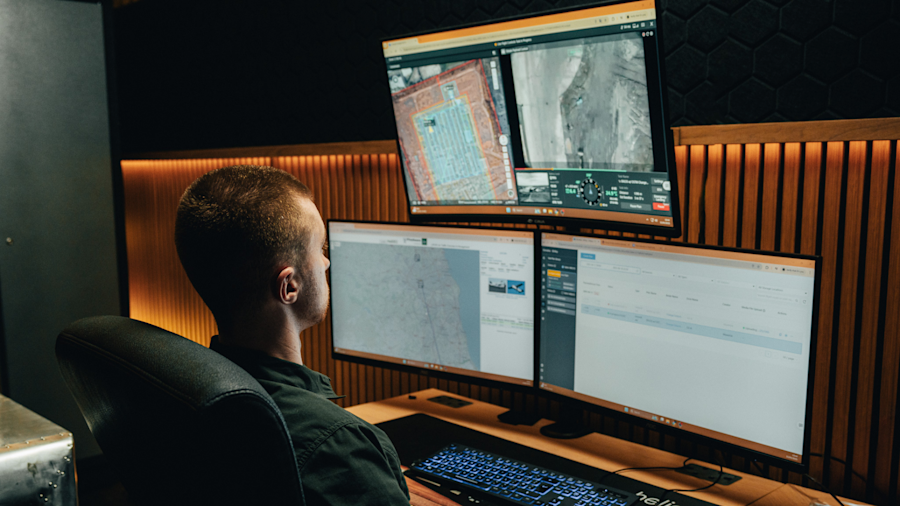 01Photo · remote command centre
Remote command centre
Centralise every dock and drone in one place. Monitor live feeds, coordinate teams and dispatch flights from anywhere — your operators run the perimeter without setting foot on it.
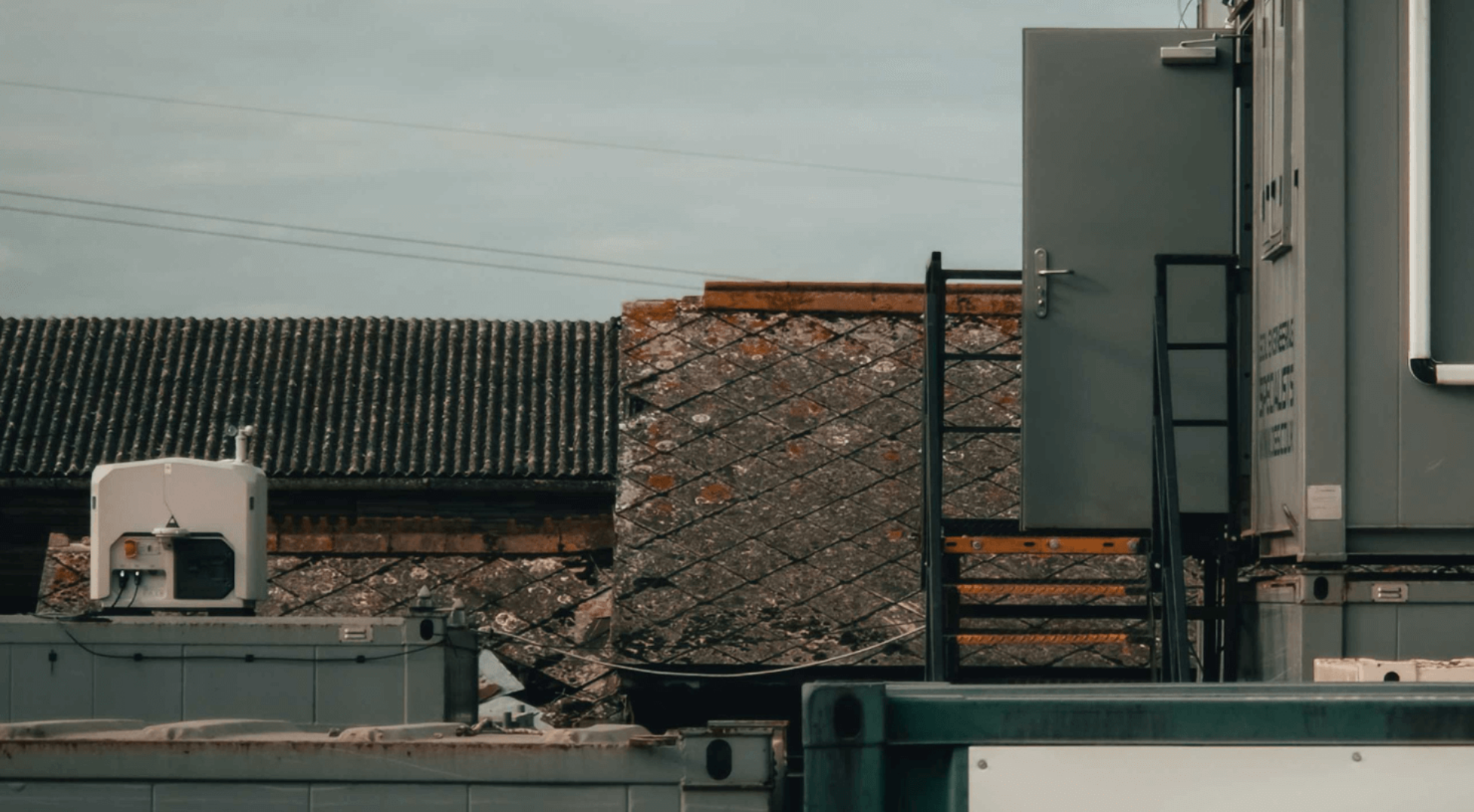 02Photo · on-demand dock on site
On-demand dock deployment
Station a Dock 3 on site and launch from anywhere for rapid response and round-the-clock surveillance. Takeoff in about ten seconds, fly the route, then return and recharge — no crew callout, no waiting.
 03versatilePhoto · mobile aerial CCTV
Mobile CCTV, no blind spots
A camera you can move. Where a fixed mast can't see, the drone repositions in seconds — covering temporary sites, changing work fronts and the angles no static install was ever going to reach.
Launch, patrol, detect, return.
Illustrative. The drone flies a routine patrol; when it detects an event it flags the target and routes an alert to operators, then resumes. Production wires real dock telemetry, routes and FlightHub 2 detections.
Scope a deployment→Autonomous, end to end.
Schedule or alarm.
A timed patrol or an alarm input starts a mission. No one has to be on site, awake, or watching a fence line for the sortie to begin.
Airborne in ~10s.
The Dock 3 opens and the drone takes off in about ten seconds from GNSS standby — overhead long before a patrol vehicle could reach the perimeter.
Fly the route.
The aircraft follows a pre-planned waypoint or patrol route, streaming a live picture back to FlightHub 2 and your command centre throughout.
Flag & alert.
Onboard and platform detection flag people, vehicles and thermal anomalies — triggering alerts that log the object, location, time and imagery for review.
Land & recharge.
The drone returns to the dock, recharges itself and re-arms for the next mission. Coverage continues through the night and the weather.
The box that never sleeps, and the eyes that fly it.
DJI Dock 3 is a rugged, climate-controlled station that houses, charges and launches the drone with no one on site — and, for the first time in a DJI dock, can be mounted on a vehicle and travel with the job.
It flies the Matrice 4TD: a thermal aircraft with a multi-lens payload that reads a scene in daylight, sees heat signatures in total darkness, and ranges targets precisely.
DJI FlightHub 2, on your terms.
FlightHub 2 On-Premises, nothing leaves your network.
One platform plans routes, schedules patrols, watches every feed and manages the data. For sites that can't send footage to anyone's cloud, On-Premises keeps every byte — drones, docks and servers — fully privatised, running in a private cloud or completely offline on local servers.
 Supported · Dock 3 · 2 · 1
heliguy has certified DJI FlightHub 2 On-Premises engineers — and FlightHub 2 holds ISO 27001 certification.
— deployment & data-sovereignty support
AI that watches so people don't have to.
Detection runs in two places. On the aircraft, the M4D Series carries up to 10 TOPS of onboard compute, so custom image-detection models can run at the edge — online or offline. In FlightHub 2, intelligent algorithms and a multimodal LLM turn the live feed into flagged events, automatic alerts and a fully automated patrol.
Together they replace hours of footage no one has time to watch with a system that detects, alerts and logs on its own.
The legal bit, handled.
Flying a dock with no pilot beside the aircraft means flying beyond visual line of sight. In the UK that sits in the CAA's Specific Category and needs an Operational Authorisation — assessed through UK SORA, which assigns a SAIL (Specific Assurance and Integrity Level) to the operation and sets the mitigations required.
It's the part most operators find hardest to start. heliguy has achieved SAIL I and SAIL II for Dock 3 deployment — and wraps the whole process in consultancy, training and a command centre, so you don't have to clear it alone.
We can fly it for you, while you build up to flying it yourself.
Start surveilling compliantly, from day one.
There are real legal requirements around autonomous operation — and you don't have to clear them all before you begin. heliguy's Remote Operation Command Centre is staffed by qualified remote pilots who can stand up and run your deployment under proper oversight while your own authorisation and team come online.
 Photo · heliguy ROCC operators
SAIL I and SAIL II achieved for DJI Dock 3 deployment.
— UK SORA consultancy · CAA-approved RAE(PC)
Fixed cameras can't move.
Fixed eyes, fixed gaps.
A network of cameras bolted to fixed points. Reliable for what they cover — but the angles never change, the blind spots are permanent, and verifying an alarm still means sending someone to look.
An eye that moves.
A docked drone adds an overhead layer that repositions on demand — covering the gaps between fixed cameras, verifying alarms from the air, and giving operators a real-time picture of the whole footprint.
Built for sites where a breach isn't an option.
Quick answers.
01Do I need a pilot on site?
No. A docked system is autonomous — the drone launches, patrols and lands itself, while your team monitors and dispatches remotely from a command centre.
You will need the right CAA permissions to operate, and heliguy's CAA-approved training team can get your operation legal and competent.
02Is this even legal — what do we need to fly it?
Yes, with the right authorisation. Autonomous, no-pilot-on-site flying is beyond visual line of sight, which puts it in the CAA's Specific Category and requires an Operational Authorisation. That's assessed through UK SORA, which assigns a SAIL (Specific Assurance and Integrity Level) to the operation and sets the mitigations needed.
heliguy has achieved SAIL I and SAIL II for Dock 3 deployment, runs a UK SORA consultancy, and can operate your deployment through our Remote Operation Command Centre with qualified pilots while your own permissions and team are put in place.
03Can the footage stay inside our own network?
Yes. FlightHub 2 On-Premises keeps all data — drones, docks and servers — fully privatised, and can run completely offline in a closed network. The AIO appliance ships with On-Premises pre-installed, uses RAID-mirrored encrypted storage, and runs with no internet connection.
heliguy has certified On-Premises engineers to deploy it, and FlightHub 2 holds ISO 27001 certification.
04Will it fly in bad weather and at night?
The Dock 3 operates from −30°C to 50°C and in winds up to 12 m/s, with an IP56 dock and IP55 aircraft. The Matrice 4TD's 640×512 thermal sensor sees heat signatures in total darkness, with night-vision modes on its optical cameras — so coverage continues through the night and the weather.
05What does the "AI on the drone" actually do?
Two things. On the aircraft, the M4D Series carries up to 10 TOPS of onboard compute for running detection models at the edge. In the platform, FlightHub 2 adds smart object detection, automatic alerts, smart patrol and a multimodal LLM that can find or flag targets from a text or image prompt.
heliguy is separately developing bespoke detection models tailored to individual sites — an area in active R&D rather than a shipping product today.
06Can one team watch several sites?
Yes. A single FlightHub 2 instance manages up to 20 devices, with multiple docks dispatching simultaneously — so a distributed estate of fixed and vehicle-mounted docks can be run from one room, fixed perimeters and mobile work fronts side by side.
07Does heliguy just sell the kit, or help us run it?
Both. heliguy specifies and supplies the system, then backs it with CAA-approved training, a DJI-certified repair workshop and the UK's largest enterprise rental fleet. Talk to a specialist and we'll scope the right build around your perimeter, your threat model and your data rules.
Let's scope your perimeter.
Tell us about your site, your threat model and how your data has to be handled. heliguy's enterprise team will design the right mix of docks, aircraft, platform and training — and support it for the long run.