Rapid response, when every second counts.
Pre-positioned, ready-to-fly drones that launch the moment a call comes in — reaching the scene ahead of officers to give commanders instant eyes in the sky. heliguy delivers the complete DFR programme, end to end.
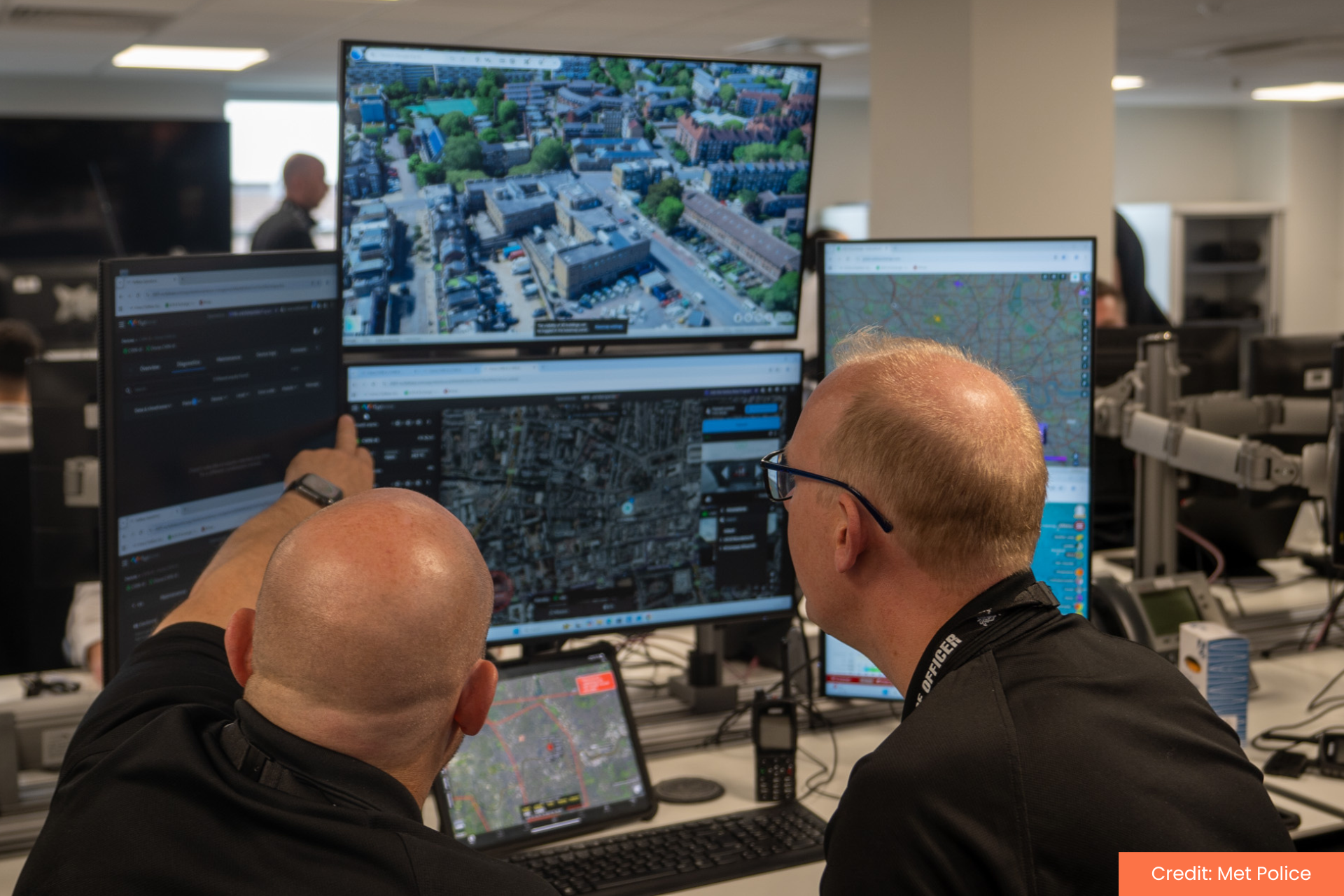 Central London · DFR flight
The biggest shift in frontline response.
DFR went mainstream in 2025. Strategically-placed docks put eyes over an incident within minutes of a 999 call — often before any ground unit arrives.
On scene, first
Docks put eyes over an incident within minutes of a 999 call — often before any ground unit arrives.
US DFR programmes · Redmond, Chula VistaCalls resolved without an officer
Established programmes show drone footage alone can resolve roughly a quarter of calls — no patrol dispatch needed.
MITRE / Police Chief Magazine, 2025Fewer unnecessary dispatches
Assess severity from the air first: clear minor calls, free patrol units for high-priority emergencies.
DFR programme data, 2025Growth in DFR programmes
2025 was the turning point — a sixfold jump in live programmes as regulation caught up.
Police1, 2025UK police forces already make around 40,000 drone flights a year, so operating multiple DFRs in towns and cities will transform the way we react to 999 calls.National Police Chiefs’ Council
Instant eyes in the sky.
Launch · reach · assess · decide — the four steps of a first-response flight. Select a step to see what happens.
A drone deploys automatically from a pre-positioned dock — on a rooftop or the back of a vehicle — the moment the call is logged. No pilot to scramble.
The kit is the easy part. Running it is the programme.
A dock is a purchase. A DFR capability is a rota, an engineering bench and a supply chain — running every hour your control room is open. Anyone can sell you the first. This is the part that decides whether the drone is airborne at 03:00 on a Sunday in February — the only thing that matters when the call comes in.
One site needs a pilot. A network needs a division.
A single dock can be run by a small team learning as it goes. Twenty cannot. At network scale the job splits into roles that have to exist separately or they collide: someone who owns the live picture and the go/no-go for each shift; someone who owns airspace, NOTAMs and deconfliction; someone who plans and validates routes; someone who keeps the deployed fleet serviceable; someone who owns crew competency and currency across the whole roster.
That structure is uneconomic on one site and unavoidable at twenty — the central awkwardness of building DFR in-house. You need the division before the network justifies it.
Redundancy is a rota problem, not a hardware one.
Two docks and one current pilot is not redundancy. Round-the-clock response needs roster depth — enough qualified, current crew that leave, sickness and lapsed recency never leave a watch uncovered. Currency is the constraint most programmes discover late: qualification is a one-off, currency is a monthly obligation across every name on the roster, and it degrades quietly.
We keep four jobs in separate hands, deliberately: setting the currency standard, delivering the training and logging the hours, signing off a pilot to deploy, and assuring the whole scheme against the safety case. Put two of those in one pair of hands and the assurance loop certifies itself — exactly the finding you do not want raised against a live public-safety operation.
Qualification is a certificate. Currency is a rota.
We repair. We don’t just replace.
Swap-and-replace is a consumer warranty model dressed up as a service. It works when you have one dock and a spare on the shelf. Across a network it means a site dark while a unit moves in each direction, and no one ever learns why the fault happened.
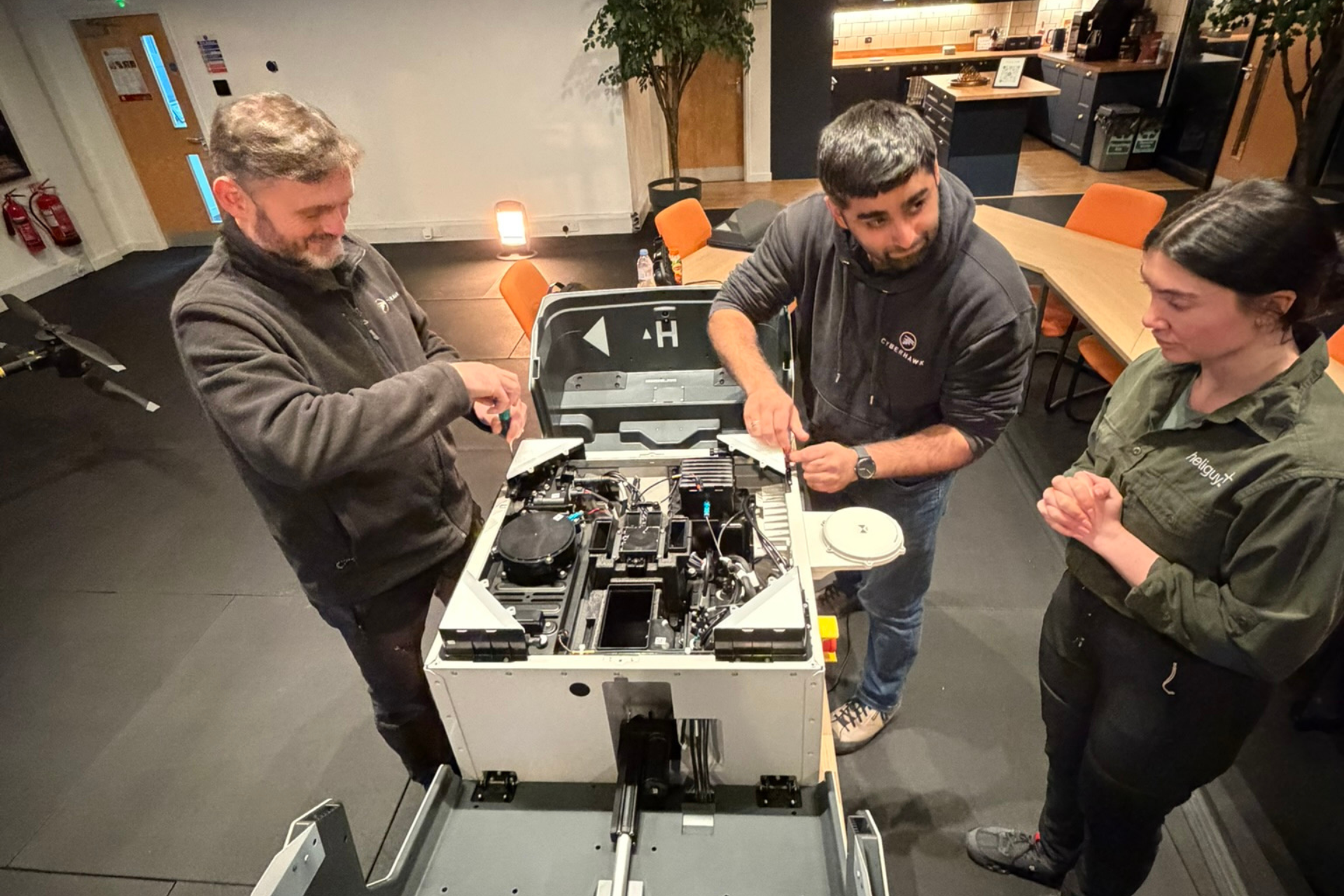
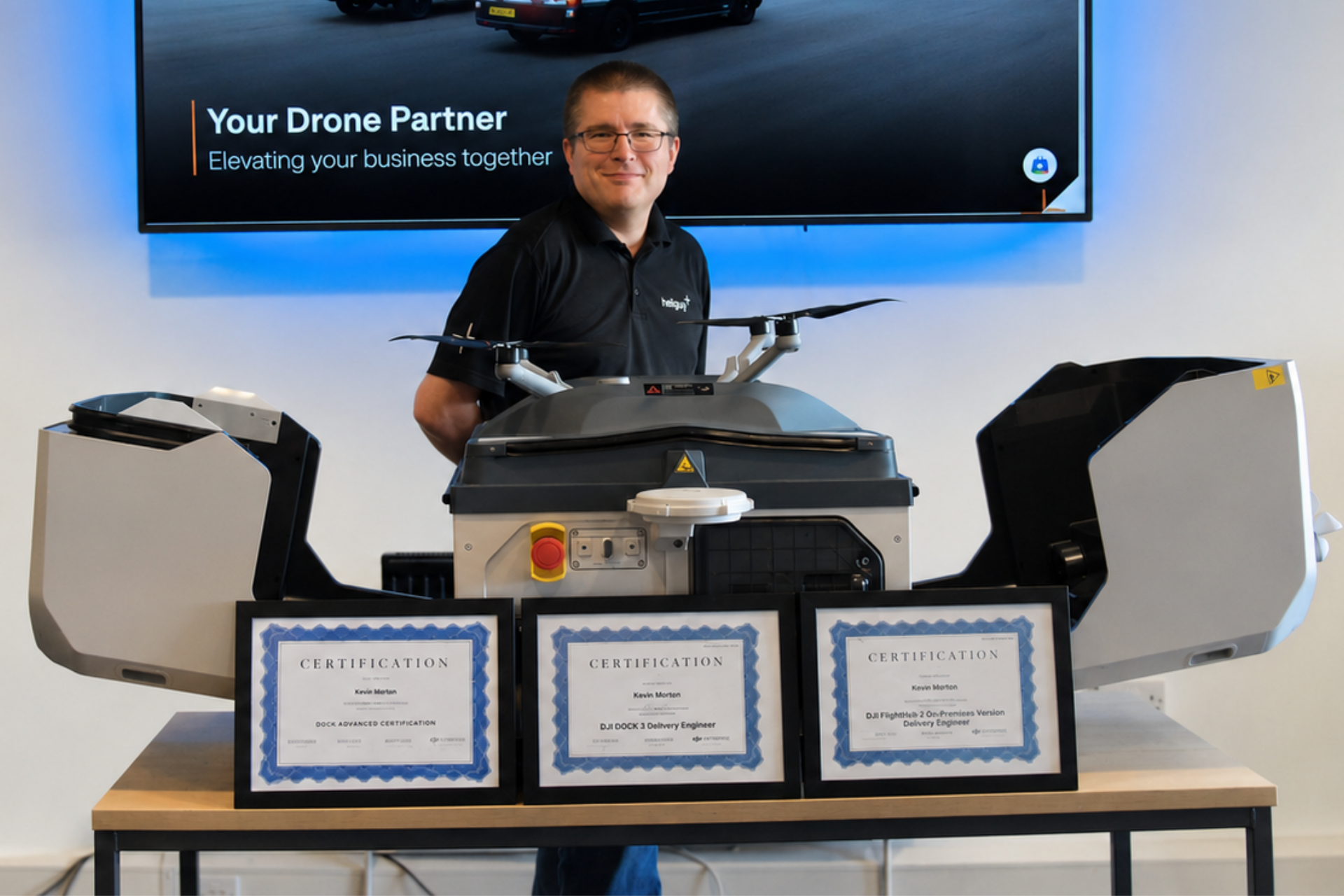
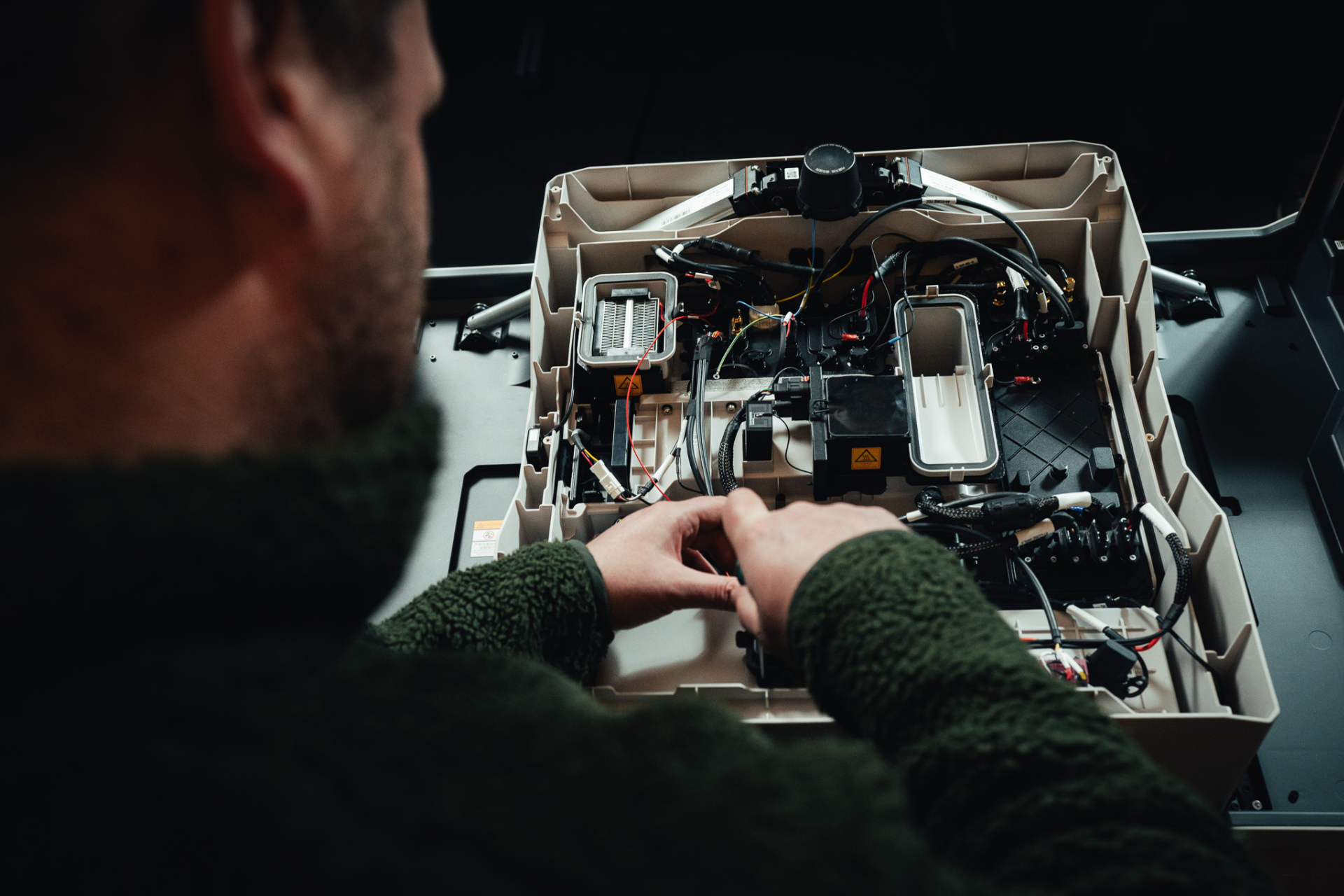
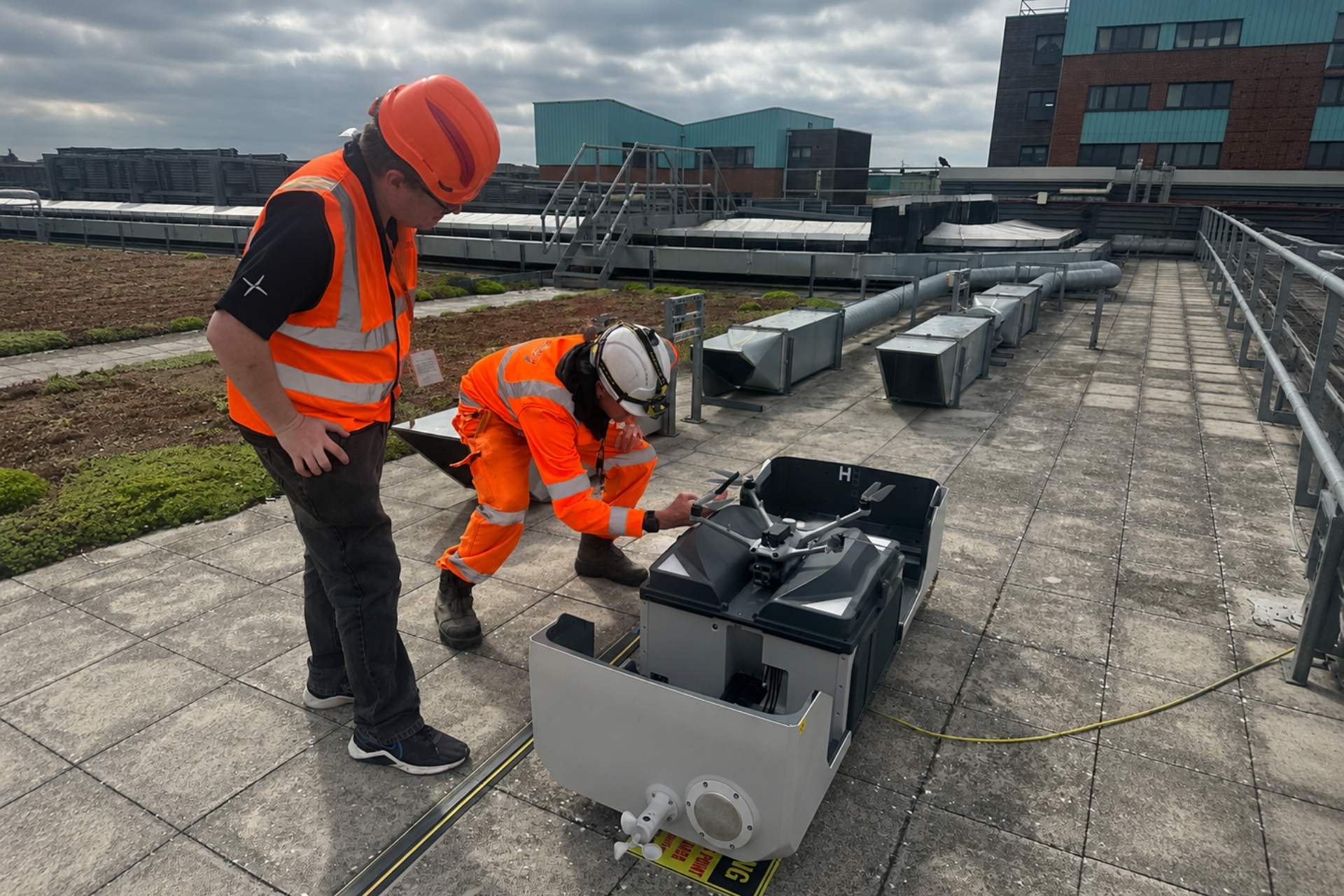
Our engineers are DJI-certified on Dock 3 and work at depth in our own UK repair centre — diagnosis on site where it can be done, component-level repair where it can’t, and a fault history that feeds back into how the next site is installed. The number that matters isn’t how fast a replacement ships. It’s how many hours the dock was unavailable.
Site dark for the round trip. Fault unexplained. Repeats.
Diagnosed on site where possible, fixed properly where not, cause recorded.
Stock on the shelf, not on a lead time.
Enterprise drone supply is not a catalogue. Volume, lead times and component availability move constantly, and a programme that scales faster than its supply chain stalls at exactly the wrong moment — mid-rollout, with sites committed. Holding real stock depth across airframes, docks, payloads and spares takes eighteen years of trading relationships and the judgement to know which supply routes hold up under pressure and which don’t.
We’ve been doing this since 2008. When you need the fourth dock, the replacement payload or the airframe that keeps a watch covered, the answer is a delivery date, not a procurement exercise.
We run one. That’s why we can help you build one.
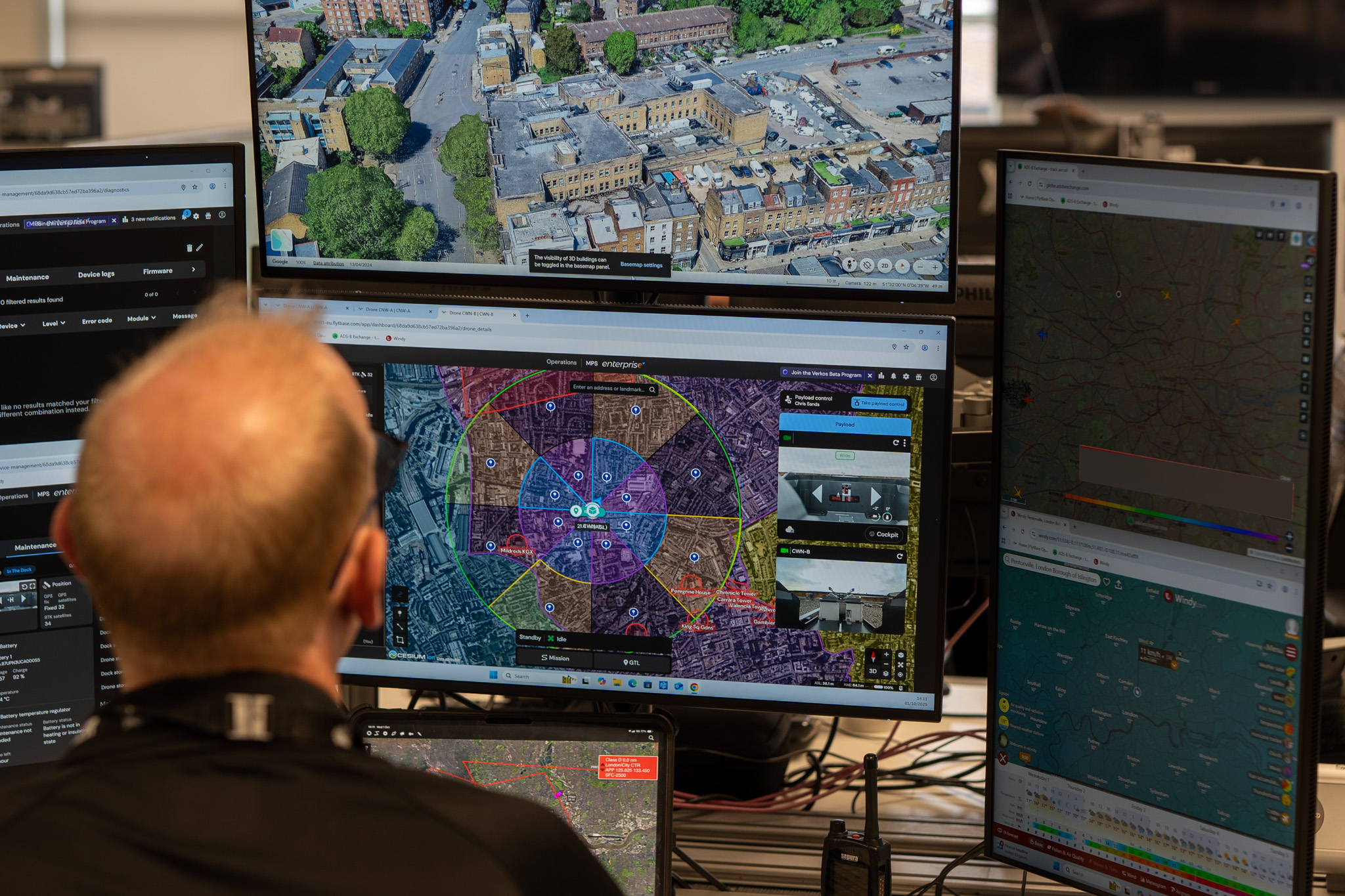
heliguy’s Remote Operations Command Centre in Newcastle commands live BVLOS dock flights over infrastructure more than 200 miles away — no one stood beside the aircraft. Everything above is how that operation is actually run, not a consultancy model drawn on a whiteboard.
When we help a force stand up its own control room, we’re handing over procedures we’re using ourselves that morning.
See how the approval behind it was argued →Recruit and hold nine roles before the network justifies them. Build a currency scheme and the records to evidence it. Carry the spares. Learn the supply chain.
The operating model, the engineering bench and the supply depth already exist. You build the capability on top of an operation that’s already running.
One dock. One platform. A complete response system.
DJI Dock 3 is the weather-resistant drone-in-a-box at the heart of DFR; FlightHub 2 is the software that runs it. heliguy integrates the whole solution into your operations — including FlightHub 2 on-premises.
Why FlightHub 2 — and not the alternatives.
FlightHub 2 is DJI’s native command-and-control platform, purpose-built for Dock 3. We’ve trialled third-party layers so you don’t have to — in our experience they add latency and complexity without adding capability you can’t get natively.
Our recommendation: for DFR on DJI Dock 3, there’s no good reason to bolt a third-party layer on top. FlightHub 2 does the job with less latency and less risk — and we’ll set it up on-premises so you keep full control of your data.
Developing a DFR programme, step by step.
We support every stage — from your first vehicle-carried drone to a force-wide network of docks.
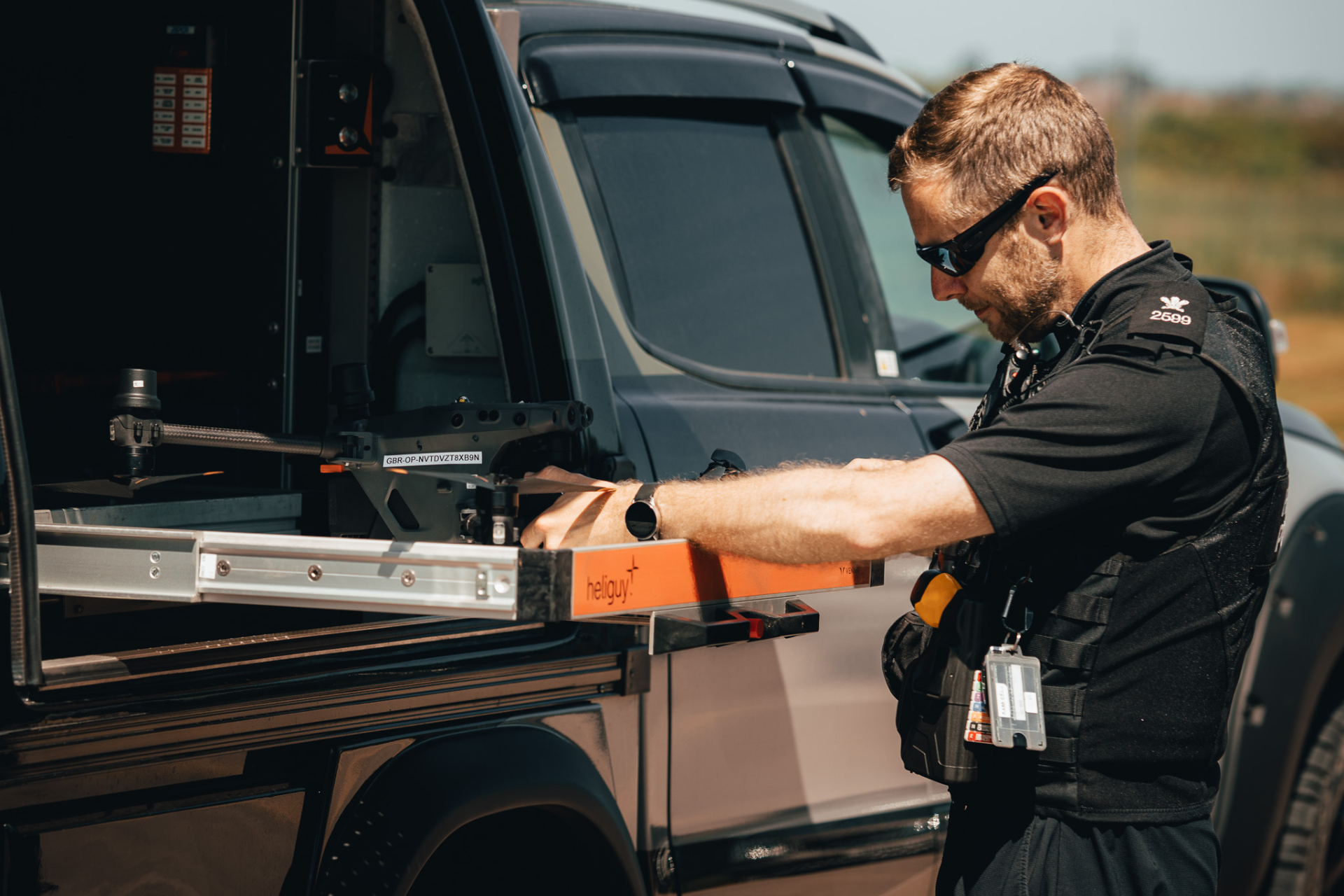
Ground-based operations
Equip personnel with drones carried in vehicles for manual, VLOS deployment. Build confidence on real missions and learn how UAS enhances situational awareness.
VLOS · manual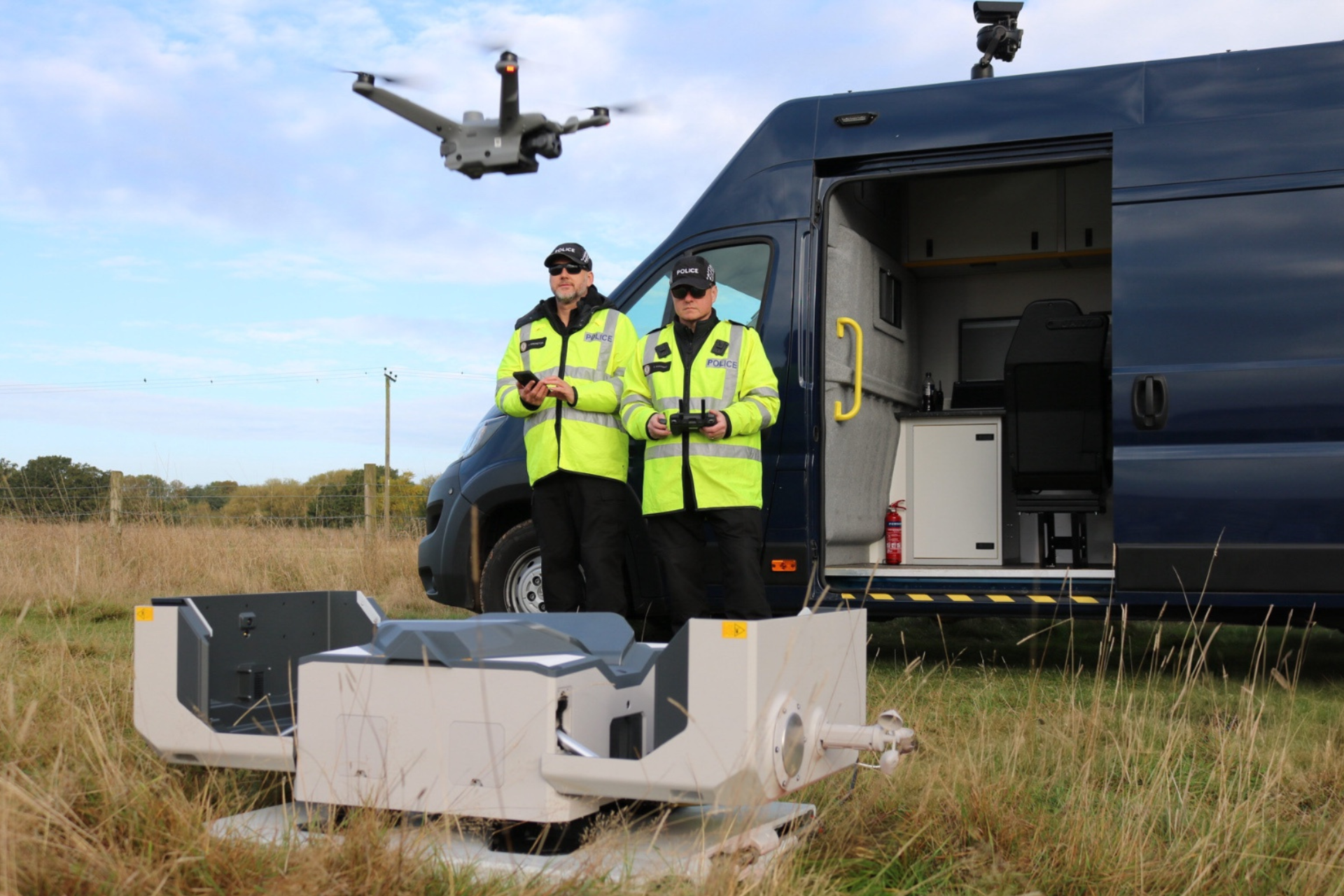
Trial dock solutions
Install a docking station at a fixed location and automate launches in a VLOS capacity. Monitor performance and compile the evidence to support BVLOS applications.
Fixed dock · evidence-building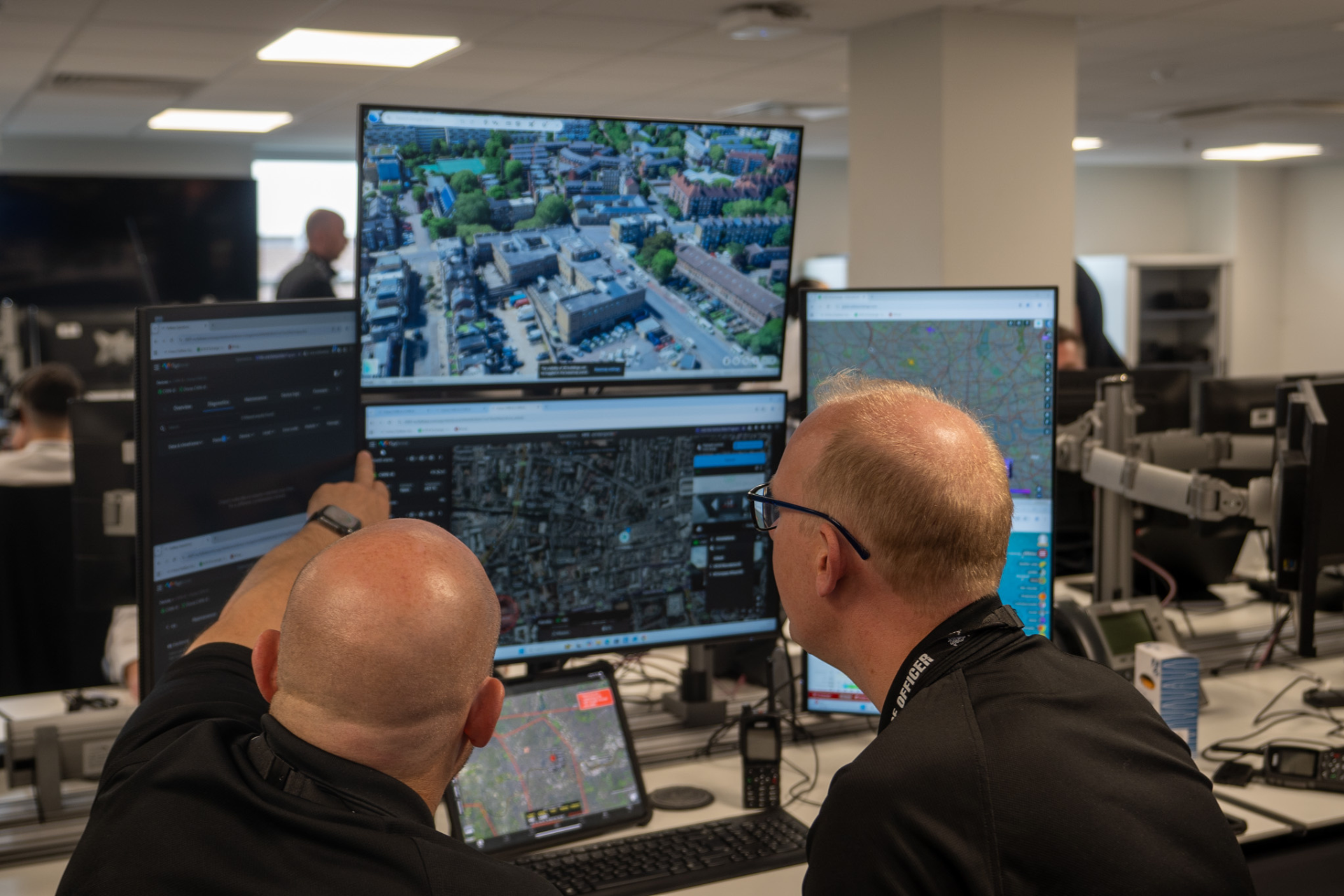
Full DFR programme
With regulatory approval secured, scale to a network of docking stations across a strategic area — drones responding remotely, data viewed centrally from your control room.
BVLOS · dock networkBVLOS starts with SORA.
Beyond Visual Line of Sight is at the heart of DFR — and the path to it runs through SORA. We’ve navigated SORA I & II end to end and secured live BVLOS permissions for DJI Dock operations — not in theory, in the field.
Not every public-safety operator takes the same route. A force operating as state aircraft agrees its assurance case with the CAA outside the Specific category; others come through SORA in the ordinary way. The framework differs — the disciplines don’t. Containment, conspicuity, crew competency and currency have to be evidenced either way, and that evidence is what we build.
SORA I
Scope the concept of operations, hazards and ground/air risk — the foundation of your safety case.
SORA II
Refine mitigations, safety objectives and evidence into a submission the CAA can approve.
Submit
We prepare and submit your application, then support you through the CAA’s questions to extended BVLOS permissions.
Regulatory consultancy that’s done it before.
The evidence you compile during dock trials feeds directly into your BVLOS case. We’ve walked this path with police forces and councils, so we know what the CAA needs to see — and how to present it: SORA I & II preparation and submission, Operational Safety Case development, trial-evidence packaging, and ongoing liaison with the UK CAA.
Eyes in the sky, for any scenario.
Police · fire · search & rescue · coastguard — a force multiplier wherever getting eyes on an incident first matters.
Building collapses
Instant structural overviews; locate trapped people without endangering crews.
Flooding & disasters
Map affected areas fast, guide rescues, identify people needing evacuation.
Maritime response
Rapid surveillance of coast and open water; locate people in distress.
Road collisions
Aerial assessment — casualties, hazards and congestion before arrival.
Fires
Thermal imaging locates hotspots and spread for safer firefighting.
Public disturbances
Keep a situational overview; assess threat without sending officers in blind.
The unknown
Real-time visuals to assess a vague, silent or unverified emergency call.
Search & rescue
Cut search times dramatically; improve coordination and survival chances.
Suspect pursuits
Overhead tracking gives a tactical edge in urban areas or rough terrain.
Hazmat incidents
Assess chemical spills or gas leaks from a safe distance, keeping crews clear.
100+ blue light agencies.
Supply · consultancy · training · regulatory — for the forces and services keeping communities safe.
London’s DFR rollout.
heliguy supplied the Metropolitan Police for their Drone as First Responder rollout — the kind of large-scale, capital-city deployment that demands proven hardware, watertight regulatory work, and a partner who can manage every moving part.
Keep sensitive information secure.
On-prem · encrypted · ISO/IEC 27001. heliguy is FlightHub 2 On-premises certified — we integrate it on your own infrastructure, so your flight data stays yours, with no internet dependency or third-party transfer.
Local Data Mode
Take the aircraft fully offline for sensitive operations — no data leaves the device, with encryption across media, comms and log exports.
ISO/IEC 27001
Where you prefer hosted, FlightHub 2 data is stored on certified AWS infrastructure, with custom permissions to match your operational structure.
Your DFR partner, end to end.
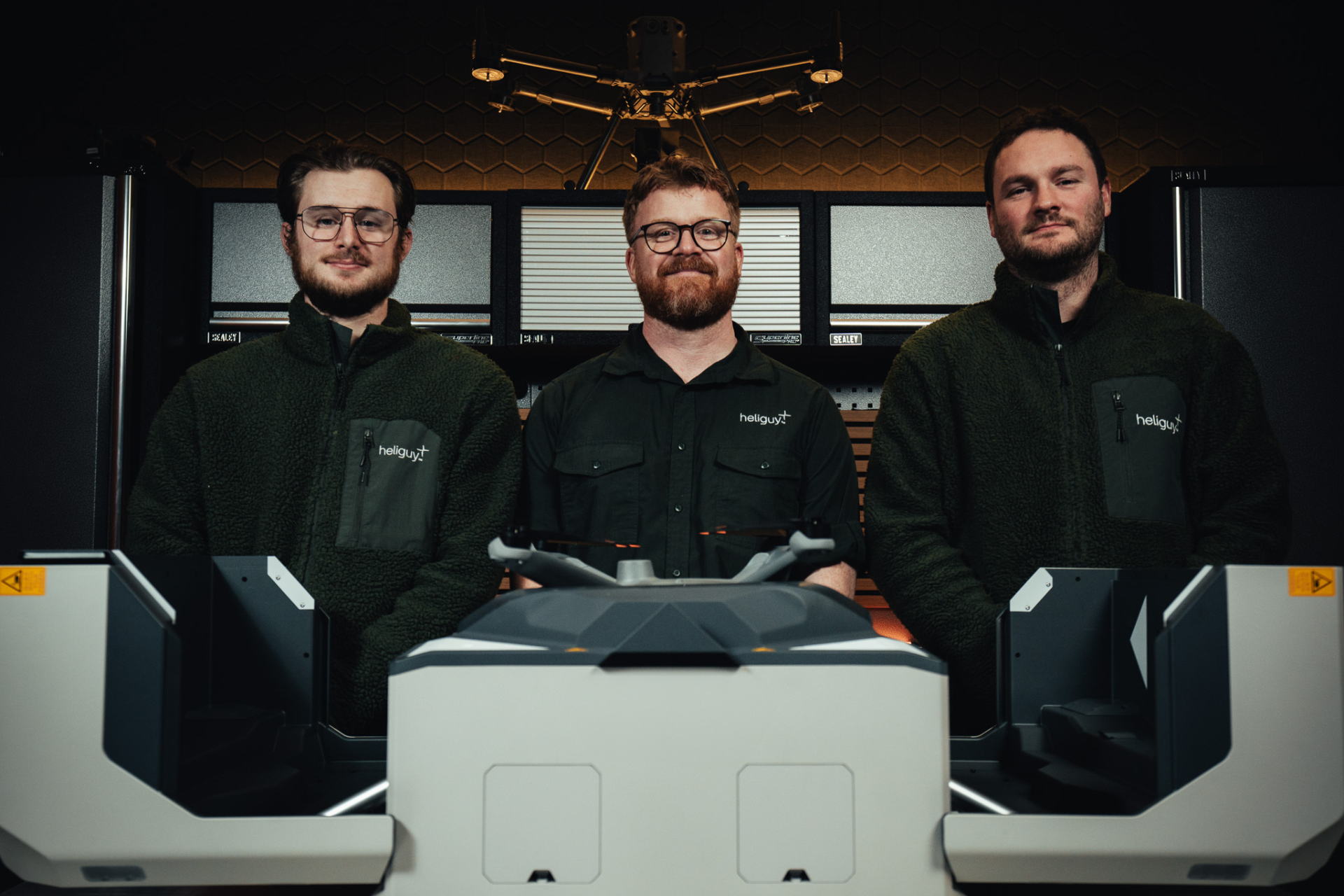
Two years invested in public safety — one partner accountable for the whole DFR journey, not just a box.
The complete programme
Hardware, software, regulatory, operations and training — one partner accountable for the whole journey.
Proven in the field
Supplied police-force and council trials, and the Met’s rollout. We’ve secured live BVLOS permissions — not in theory.
A working ROCC
We run live BVLOS dock operations from our own control centre — experience we use to help you build yours.
DJI-certified engineers
An in-house team of certified Dock engineers plus a full repair centre keeps your fleet operational.
On-prem data ownership
FlightHub 2 On-premises certified — your data stays yours, no internet dependency or third-party transfer.
One software, done right
We’ve trialled the alternatives. FlightHub 2 on Dock 3, set up properly, beats bolting on complexity.
DFR, answered.
Accelerate your response. Protect your community.
Talk to the public-safety team
Whether you’re flying your first trial or scaling a force-wide network of docks — talk to a team that has done it before. Hardware, regulatory, operations and training, end to end.
Talk to the public safety team →Book a DJI Dock demo
See Dock 3 and FlightHub 2 in action, and walk through the roadmap from trial to full BVLOS deployment with our specialists.
Book a DJI Dock demo →