UK drone laws
Where can you fly, and what do you need before you do? This is our plain-English guide to operating a drone legally and safely in the UK — the flight categories, registration, and the training that goes with each.
Maintained by heliguy's CAA-approved training teamFlight categories
Most operations fall into one of two categories — Open (smaller drones, lower-risk flights) or Specific (larger drones, more complex missions).
Compare them →Registration
Most drone users must register with the UK CAA, obtaining a Flyer ID and/or an Operator ID before they fly.
Registration guide →Training
The main qualifications are the A2 CofC (some Open Category flights) and the GVC (Specific Category) — both available with heliguy.
Which do I need? →Open or Specific — which applies to your flight?
The category you fly in depends on your aircraft and where and how you operate. Here's how the two compare under current UK drone law.
Open Category
Applies to low-risk flights — either because you're flying a small drone, or operating a larger aircraft far from people and away from built-up areas. You don't need specific approval from the UK CAA to fly here, although in some cases an A2 Certificate of Competency (A2 CofC) is needed.
Specific Category
For higher-risk, more complex operations — enabling larger drones to operate closer to built-up areas, and catering for pilots flying beyond standard permissions, such as BVLOS. Approval via an Operational Authorisation is required from the UK CAA, and the training pathway is the General Visual Line of Sight Certificate (GVC).
The Remote Pilot Certificate (RPC) ladder
The RPC framework is the CAA's progression route for Specific Category operations, built around UK SORA. Unlike the GVC — a standalone Visual Line of Sight qualification — the RPC levels stack, each one assuming the level below, giving a clear path towards Beyond Visual Line of Sight work. heliguy is authorised to train RPC-L1 and RPC-L2.
Level 1 Remote Pilot Certificate
The entry rung of the ladder, broadly similar in competency to the GVC, for Visual Line of Sight flights under a Specific Category Operational Authorisation.
- Operations
- VLOS only
- Aircraft
- Rotorcraft or fixed-wing
- Minimum age
- None
- Entry
- Flyer ID (GVC holders are exempt from the theory test)
- Validity
- Five years
Level 2 Remote Pilot Certificate
The first qualification to authorise Beyond Visual Line of Sight operations — in ARC-a airspace, where no other air traffic is expected. The step most serious operators climb towards.
- Operations
- VLOS, plus BVLOS in ARC-a (no other traffic)
- Minimum age
- 18
- Entry
- Flyer ID · RPC-L1 (same aircraft category) · 50 logged Specific Category flight hours
- Validity
- Three years
RPC-L3 (BVLOS up to ARC-c, requiring a LAPL medical) is the next step beyond L2. Source: UK CAA remote pilot qualifications.
Guides to specific rules
More detail on registration and on the specialist flight types that have their own considerations under UK law.
 Before you fly
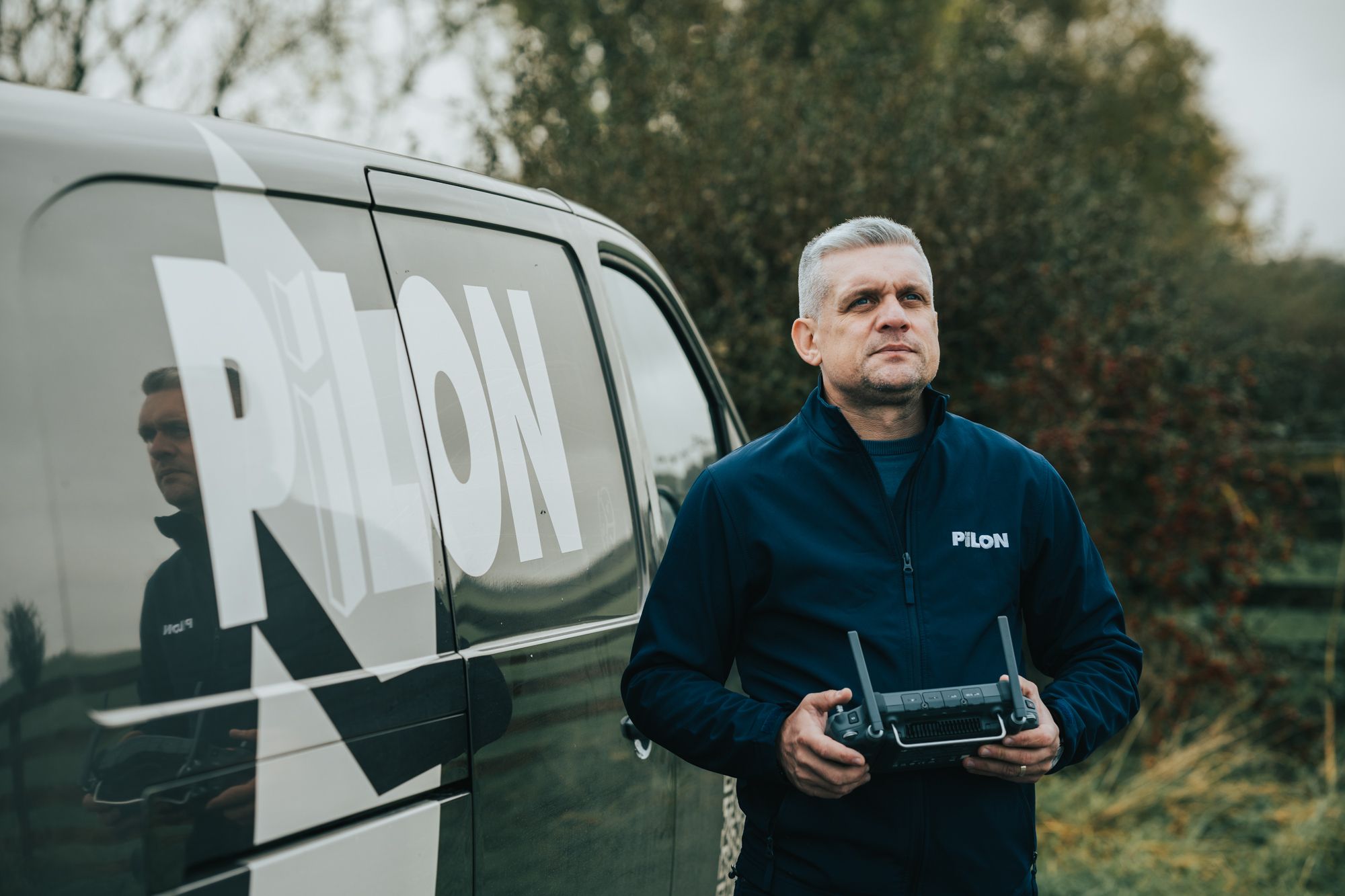
UK drone registration
Registering is a key step to flying legally — failure to do so could result in penalties. Register through the UK CAA to obtain a Flyer ID and/or Operator ID.
Registration guide →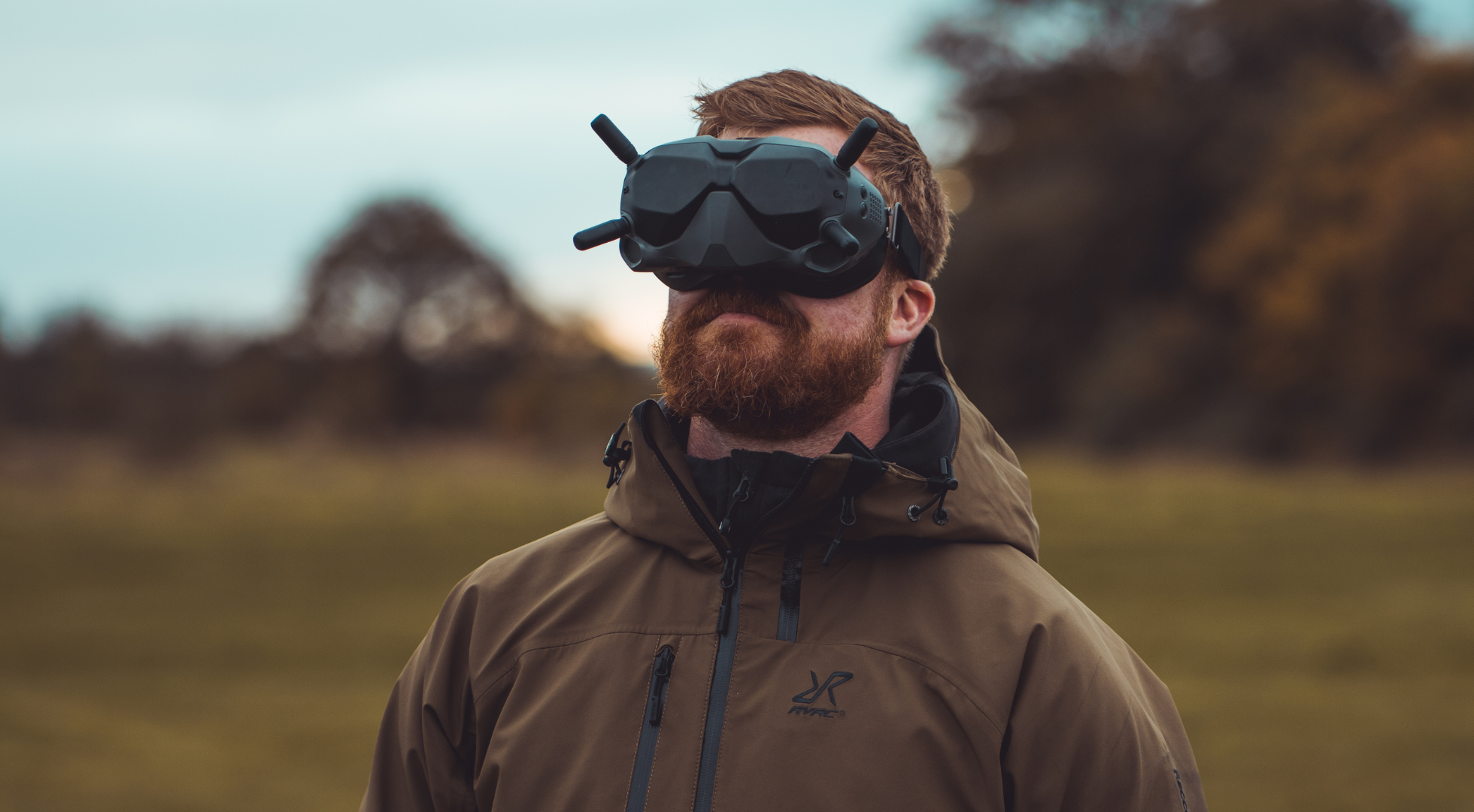 FPV & racing
FPV drone laws
First-person-view flight is thrilling and immersive — but it has its own rules. Our in-depth guide covers flying with goggles and drone racing.
FPV guide →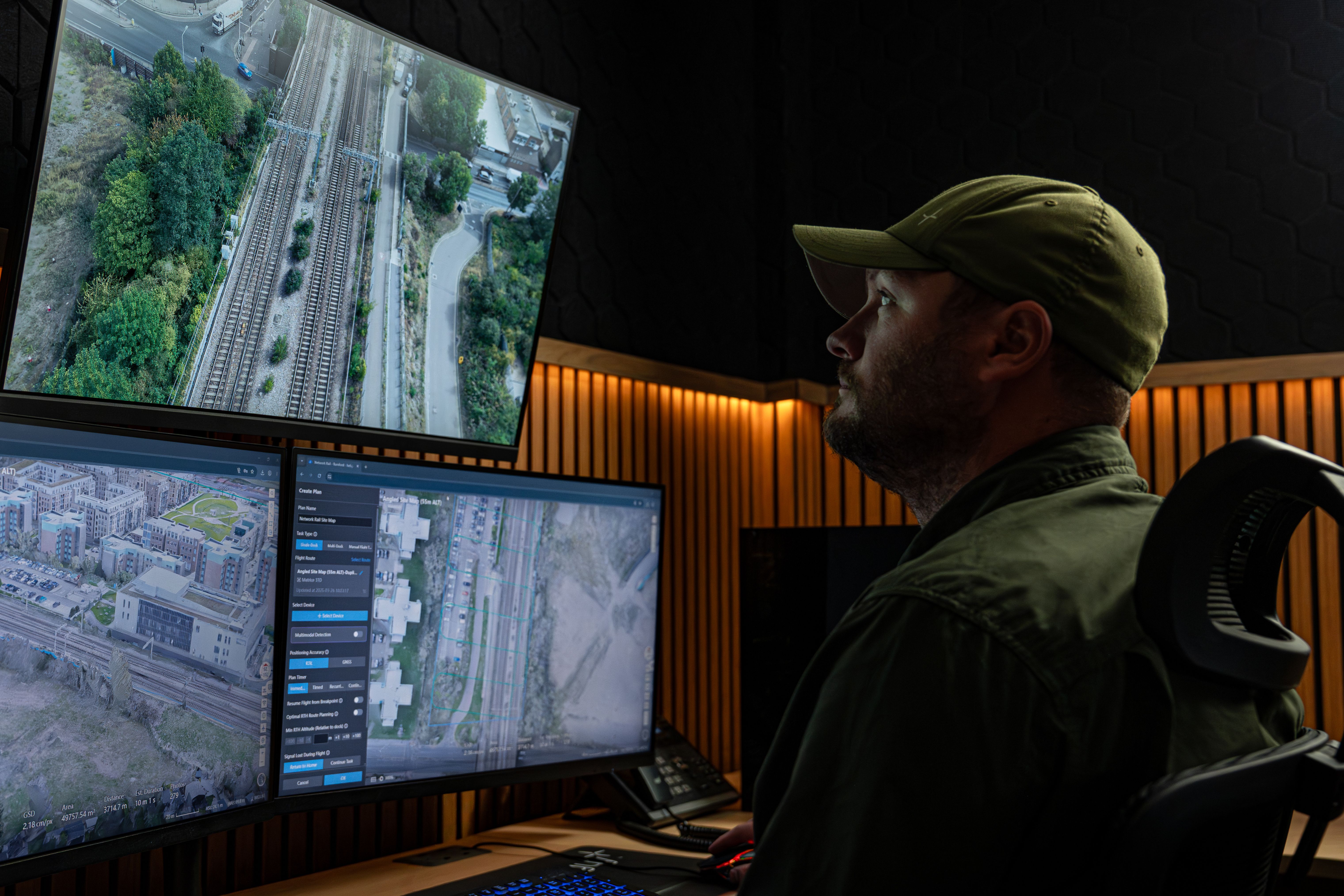 Advanced ops
BVLOS operations
Beyond Visual Line of Sight extends flight range and unlocks automated, round-the-clock missions. heliguy's UK SORA consultancy helps build your safety case.
BVLOS guide →Find the training you need in two minutes
Confused about what's required to operate your drone? Our licence calculator recommends the right pathway — A2 CofC, GVC, or no training needed — based on your aircraft's weight and how you intend to operate.
Supported by industry-leading training
A2 CofC Drone Training Course
GVC Drone Training Course
Combined A2 CofC & GVC Course