Drone obstacle avoidance explained
Understanding drone obstacle avoidance technology across DJI consumer and enterprise drones, including vision sensors, infrared systems, LiDAR, radar, and APAS.

This guide explains how drone obstacle avoidance systems work, including the vision sensors, infrared systems, LiDAR, radar, and APAS technologies used across DJI drones. It also compares obstacle sensing systems across consumer and enterprise platforms and explores why these technologies are important for safer and more autonomous flight.
Key takeaways
- Modern drones use vision sensors, infrared systems, LiDAR, and radar to detect and avoid obstacles during flight.
- Omnidirectional binocular vision monitors obstacles in multiple directions simultaneously and provides accurate depth perception.
- LiDAR improves obstacle detection precision, particularly in low-light and close-range environments.
- mmWave radar is commonly used on advanced enterprise drones for reliable sensing in fog, dust, smoke, and darkness.
- DJI’s APAS technology allows drones to automatically reroute around obstacles instead of simply stopping.
- Obstacle avoidance improves flight safety but does not replace pilot awareness and safe operating practices.
Obstacle avoidance has become one of the most important safety features in modern drones, helping pilots fly more confidently in increasingly complex environments. From lightweight consumer drones to advanced enterprise platforms, modern drones now use a combination of vision sensors, infrared systems, LiDAR, and radar to detect and avoid nearby obstacles during flight.
This guide explains how drone obstacle avoidance systems work, the different technologies used across DJI drones, and how obstacle sensing varies between consumer and enterprise platforms.
What is obstacle avoidance in drones?
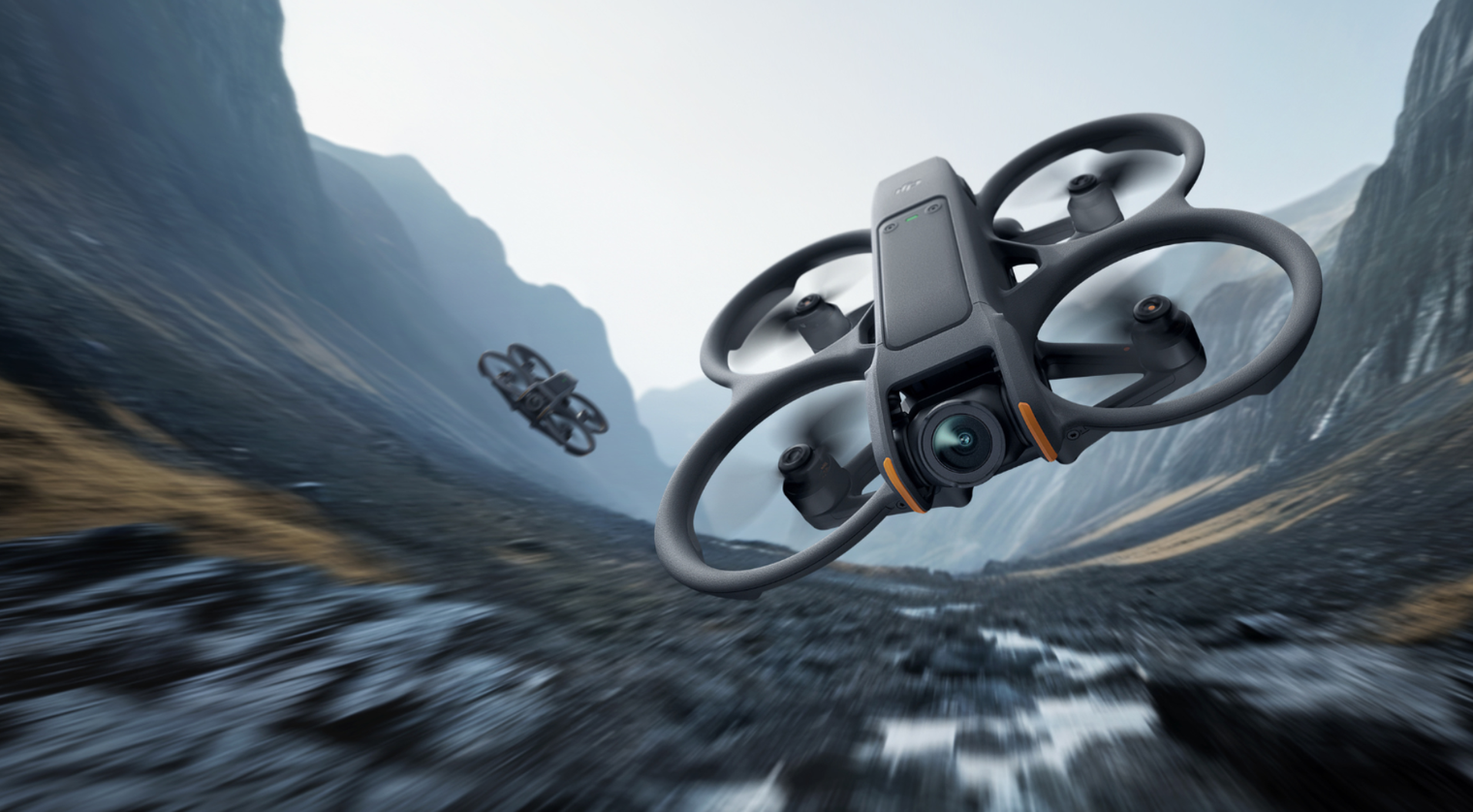
Obstacle avoidance is a drone safety feature that helps prevent collisions during flight. Using onboard sensors and intelligent flight software, drones can detect nearby objects such as trees, buildings, walls, and power poles, then automatically stop, slow down, or adjust their flight path to avoid impact.
Modern obstacle avoidance systems are designed to improve flight safety, especially for beginner pilots and autonomous drone operations. The technology is now common across many DJI drones, although the level of protection varies depending on the model.
How drone obstacle avoidance systems work
Modern drone obstacle avoidance systems use a combination of sensors, onboard processing, and flight control software to detect obstacles and help prevent collisions during flight. Depending on the drone model, these systems can automatically brake, warn the pilot, or dynamically adjust the flight path in real time.
Vision sensors and infrared systems
Many drones rely on vision sensors and infrared systems as the foundation of their obstacle avoidance technology.
Vision systems use cameras positioned around the aircraft to detect nearby objects and estimate depth and distance. They are highly effective in well-lit environments and are widely used because they provide accurate environmental awareness without adding excessive weight to the drone.
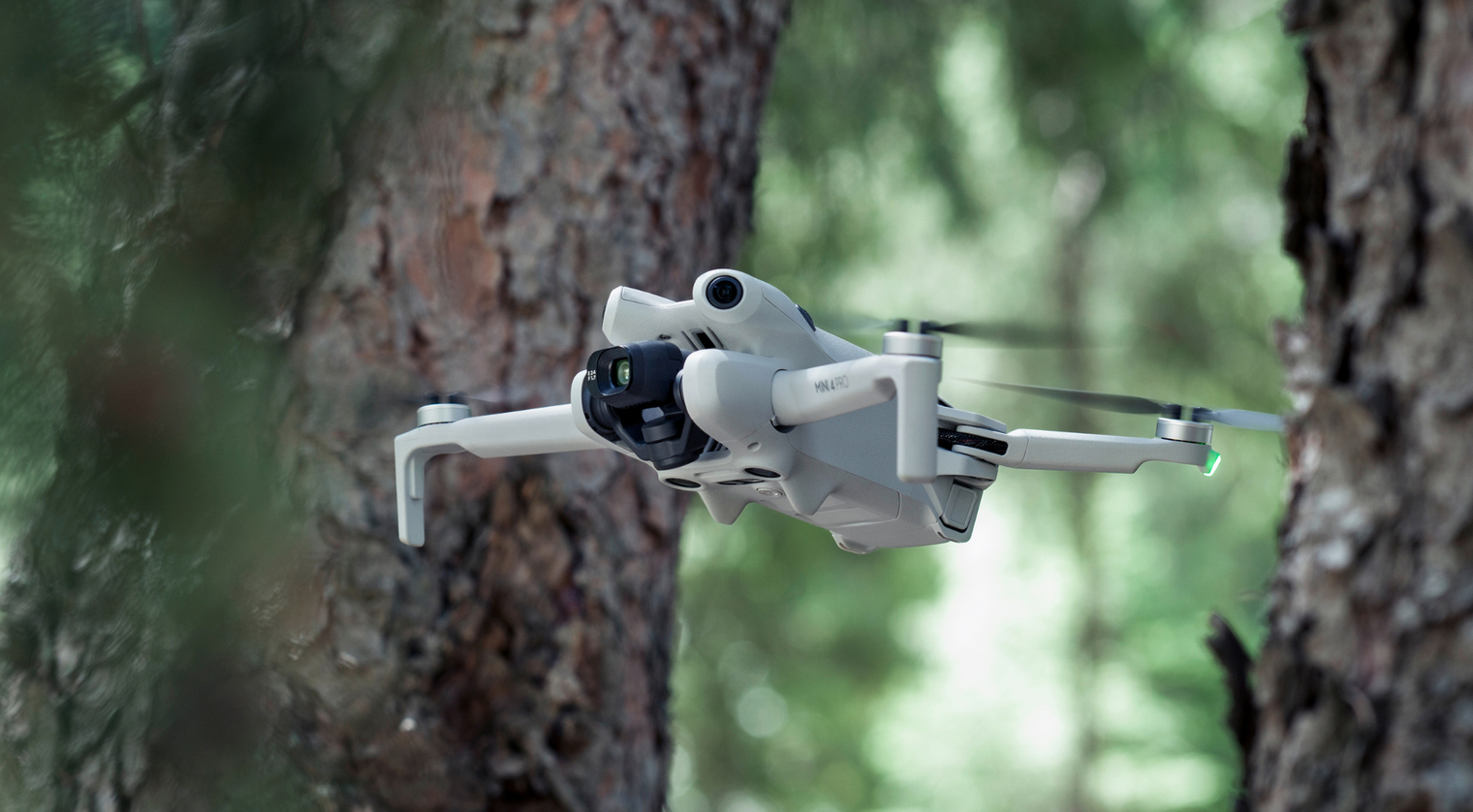
Modern vision-based obstacle avoidance systems often include:
- Omnidirectional sensing: allowing the aircraft to monitor obstacles in multiple directions simultaneously.
- Binocular vision: providing improved depth perception and obstacle detection accuracy by using paired cameras to better estimate distance and object positioning.
Infrared sensors are commonly positioned underneath the aircraft to assist with low-altitude hovering, landing, and ground detection. These systems are particularly useful indoors or in environments where GPS signals may be weak.
LiDAR and radar systems
More advanced obstacle avoidance systems incorporate LiDAR and radar technologies to improve detection performance in challenging environments.
LiDAR uses laser pulses to generate highly accurate depth measurements and 3D environmental awareness. This improves obstacle detection precision, especially in low-light conditions and close-range navigation.
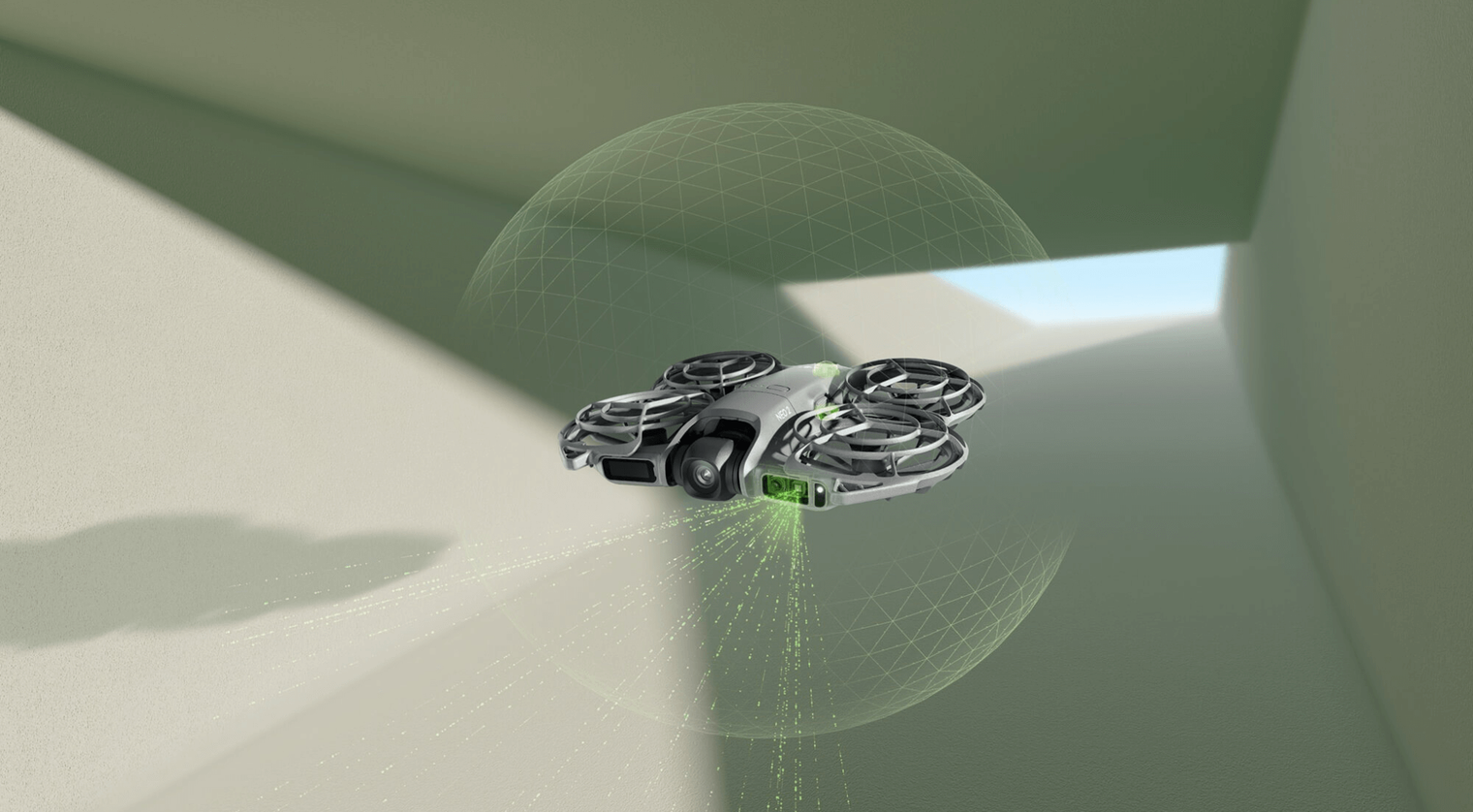
Some drones, such as DJI Matrice 400, also feature mmWave radar systems, which use radio waves instead of light. Radar systems are more reliable in conditions such as darkness, fog, dust, smoke, or rain, where camera-based systems may become less effective.
Real-time obstacle detection and route adjustment
Obstacle avoidance is not just about detecting objects — the drone must also react instantly to avoid a collision.
As sensor data is collected, the drone’s flight controller processes the information in real time and decides how to respond safely.
Depending on the drone and flight mode, the aircraft may:
- Stop and hover automatically
- Slow down before impact
- Fly around obstacles
- Recalculate its flight route
- Adjust Return-to-Home flight paths
DJI’s Advanced Pilot Assistance System (APAS) technology allows certain drones to intelligently navigate around obstacles instead of simply stopping in front of them, creating smoother and safer autonomous flight.
Which DJI drones have obstacle avoidance?
Obstacle avoidance features vary significantly across DJI’s drone range depending on the intended use, price point, and operational requirements. The table below compares the obstacle avoidance technologies used across a range of DJI consumer and enterprise drones.
| Model | Vision System | Infrared Sensor | LiDAR | Radar | APAS |
|---|---|---|---|---|---|
| DJI Matrice 400 | Omnidirectional binocular | Downward | Horizontal rotating LiDAR, upper LiDAR | Six-direction mmWave radar | ✓ |
| DJI Matrice 4 TD\4T | Omnidirectional binocular | Downward | Rotating LiDAR | mmWave radar | ✓ |
| DJI Matrice 350 RTK | Six-directional binocular | Six-directional | ✗ | Bolt-on DJI CSM Radar | ✗ |
| DJI Mavic 3 Series | Omnidirectional binocular | Downward | ✗ | ✗ | ✓ |
| DJI FlyCart 100 | Five-directional binocular | ✗ | High-precision LiDAR | Front and rear mmWave radars | ✓ |
| DJI Mini 5 Pro | Omnidirectional binocular | Downward | Forward | ✗ | ✓ |
| DJI Mini 4 Pro | Omnidirectional binocular | Downward | ✗ | ✗ | ✓ |
| DJI Air3 Series | Omnidirectional binocular | Downward | Forward | ✗ | ✓ |
| DJI Neo 2 | Omnidirectional monocular | Downward | Forward | ✗ | ✓ |
| DJI Lito 1 | Omnidirectional monocular | Downward | ✗ | ✗ | ✓ |
| DJI Lito x1 | Omnidirectional monocular | Downward | Forward | ✗ | ✓ |
| DJI Avata 360 | Omnidirectional binocular | Downward | Forward | ✗ | ✓ |
| DJI Avata 2 | Downward and backward visual positioning | Downward | ✗ | ✗ | ✗ |
| DJI Flip | Downward visual positioning | Forward and downward | Forward | ✗ | ✗ |
Consumer vs enterprise obstacle avoidance systems
Consumer and enterprise drones often use similar sensing technologies, including vision systems, infrared sensors, LiDAR, and radar. However, their obstacle avoidance systems are designed for different operational priorities.
Consumer drones
DJI consumer drones are designed primarily for ease of use, automation, and beginner-friendly flying. Many models combine:
- Omnidirectional binocular vision
- Infrared sensing
- LiDAR
- APAS (Advanced Pilot Assistance Systems)
These technologies help drones automatically detect obstacles, brake, reroute, and maintain smoother flight paths during everyday flying and cinematic filming.
Consumer drone design also considers pricing, weight, and portability. As a result, some models use lighter or more cost-effective sensing systems. For example, the DJI Lito series uses omnidirectional monocular vision systems instead of binocular systems to help reduce aircraft weight and cost.
Enterprise drones
Enterprise drones are commonly used for:
- Surveying and mapping
- Industrial inspections
- Cargo transport
- Emergency response
- Infrastructure operations
In these environments, reliability and operation in difficult conditions are often more important than cinematic autonomous flight.
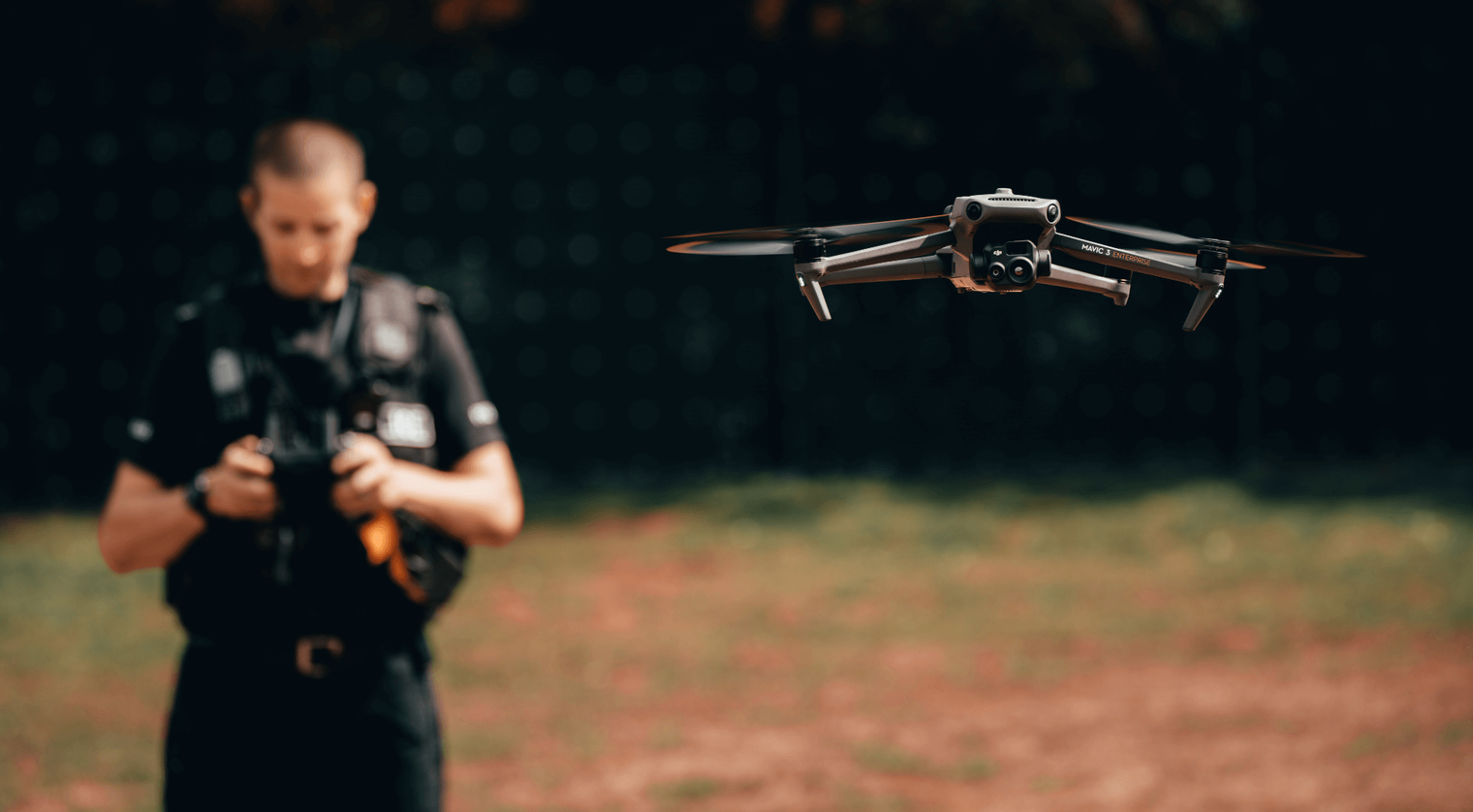
As a result, enterprise drones increasingly incorporate advanced technologies such as:
- mmWave radar
- Rotating LiDAR systems
- RTK positioning
- Multi-directional sensing arrays
These systems are better suited for night operations, terrain following, low-visibility environments, and complex industrial sites where traditional vision-only systems may be less reliable.
Why obstacle avoidance matters for drone safety
Obstacle avoidance systems play a major role in improving drone safety, particularly as drones become more autonomous and accessible to beginner pilots. Modern drones can travel at high speeds and operate in complex environments where obstacles such as trees, buildings, cables, and terrain can be difficult to judge accurately from the camera feed alone.
By using technologies such as vision sensors, infrared sensing, LiDAR, and radar, obstacle avoidance systems help drones:
- Detect nearby obstacles
- Warn the pilot
- Brake automatically
- Reroute around hazards
This helps reduce collision risk, protect expensive equipment, and improve overall flight confidence.
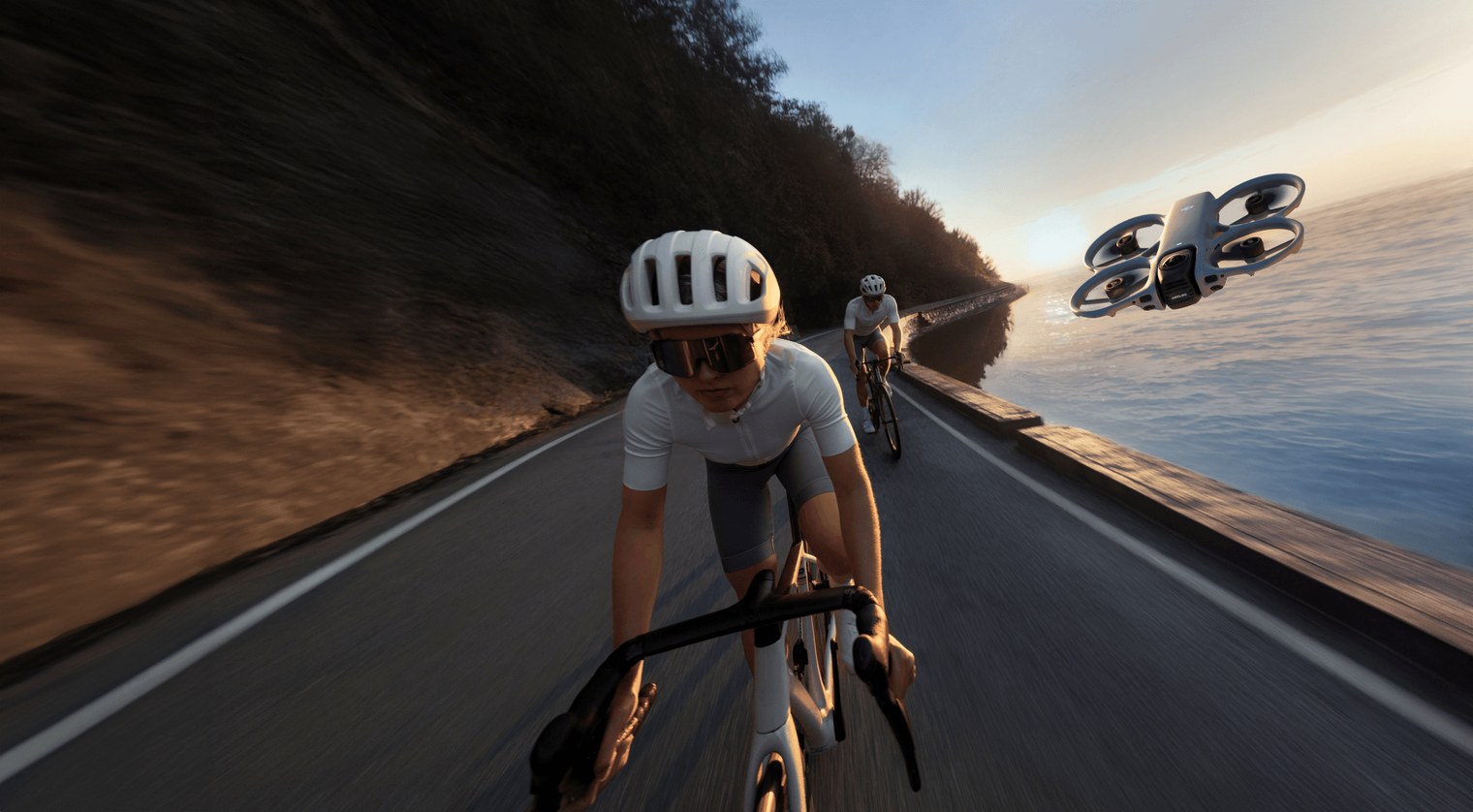
Obstacle avoidance is especially important in low-visibility environments, fast-moving flight paths, and complex terrain. However, these systems are not perfect and should not replace pilot awareness, as factors such as thin branches, power lines, reflective surfaces, and poor lighting conditions can still affect detection performance.
Conclusion
Drone obstacle avoidance technology continues to evolve as aircraft become more autonomous, intelligent, and capable of operating in increasingly demanding environments. As sensing systems advance across both consumer and enterprise platforms, understanding how these technologies work can help pilots choose the right drone for their operational needs and fly more safely in complex conditions.
To find the right DJI drone for your requirements, shop at heliguy™ or contact us for expert advice on obstacle avoidance systems, autonomous flight features, and operational suitability.
Frequently asked questions
What is drone obstacle avoidance?
Drone obstacle avoidance is a safety feature that helps drones detect nearby objects and avoid collisions during flight. Using onboard sensors and intelligent flight software, the drone can identify obstacles such as trees, buildings, walls, and cables, then automatically brake, slow down, hover, or reroute to reduce the risk of impact.
Read more about drone obstacle avoidance systems.
Which drones have obstacle avoidance?
Obstacle avoidance features vary significantly across DJI’s drone range depending on the intended use, price point, and operational requirements. The table below compares the obstacle avoidance technologies used across a range of DJI consumer and enterprise drones.
Read more about drone obstacle avoidance systems.
How does obstacle avoidance work?
Obstacle avoidance systems use a combination of sensors, onboard processing, and flight control software to monitor the environment around the drone. Depending on the aircraft, this may include:
- Vision sensors
- Infrared sensors
- LiDAR
- Radar
The drone processes this data in real time and can automatically stop, warn the pilot, slow down, or adjust its flight path when obstacles are detected.
Read more about drone obstacle avoidance systems.
Is obstacle avoidance reliable?
Modern obstacle avoidance systems are highly effective in many flying conditions and significantly improve flight safety. However, they are not perfect and can still be affected by:
- Poor lighting
- Thin branches or wires
- Reflective surfaces
- Fog, rain, or smoke
- Fast flight speeds
Pilots should still maintain visual awareness and avoid relying entirely on automated systems.
Read more about drone obstacle avoidance systems.
What sensors are used in drones?
Modern drones may use several types of sensing technologies, including:
- Vision sensors for object detection and depth estimation
- Infrared sensors for hovering and ground detection
- LiDAR for precise depth mapping
- Radar for obstacle detection in poor visibility
- GPS and positioning systems for navigation and stability
The combination of sensors varies depending on the drone model and intended use.
Read more about drone obstacle avoidance systems.
Can obstacle avoidance prevent crashes?
Obstacle avoidance systems can significantly reduce the risk of crashes by helping drones detect and react to nearby hazards automatically. However, they cannot guarantee collision prevention in every situation. Environmental conditions, sensor limitations, and pilot input can still affect overall flight safety.
Read more about drone obstacle avoidance systems.