Can you fly a drone in the rain? IP ratings guide
Can you fly a drone in the rain? Learn what IP ratings mean, which DJI drones are IP-rated, and how to fly safely in wet weather without damaging your aircraft.

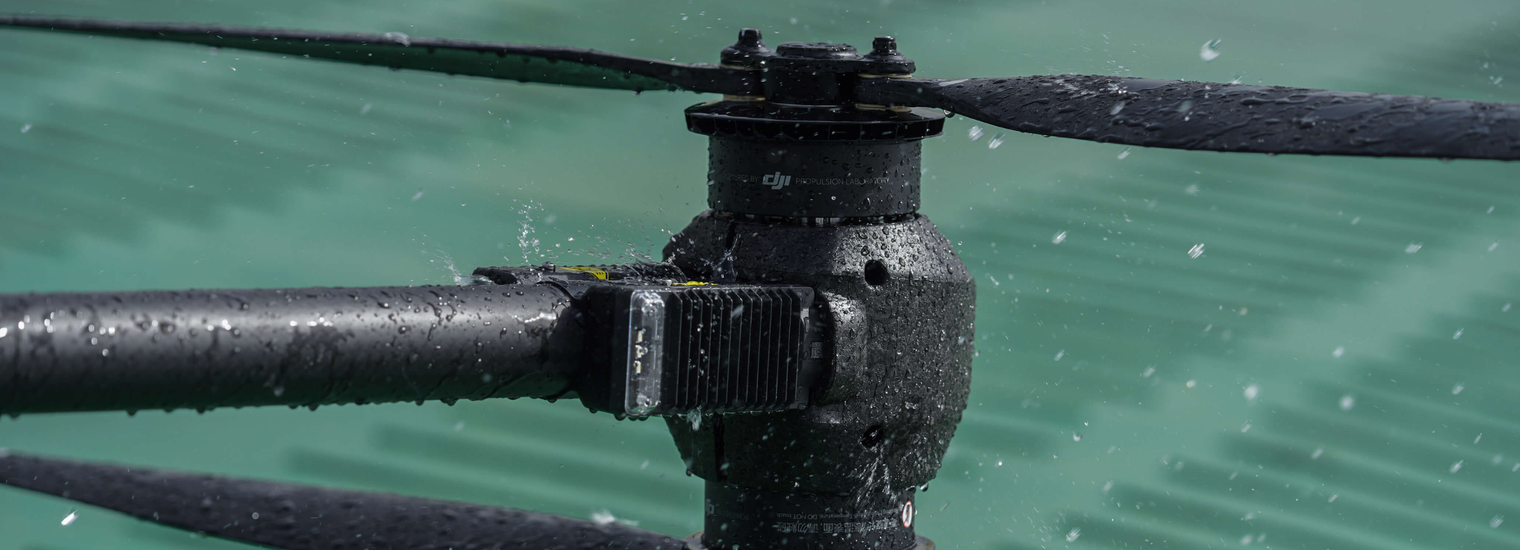
- Find out which DJI drones you can fly in the rain;
- A guide to IP Ratings and how they relate to flying a drone;
- Learn what each digit in an IP code represents;
- Understanding IP ratings is important to knowing how your drone can handle difficult weather and operating conditions.
Can you fly a drone in the rain? In most cases, we advise you don’t — unless your aircraft has an IP rating.
Most consumer drones are not designed to resist water ingress, meaning even light drizzle can seep into vents, seams and ports, potentially leading to sensor errors, corrosion or electrical failure.
That’s why understanding Ingress Protection (IP) ratings is essential for wet-weather drone operations.
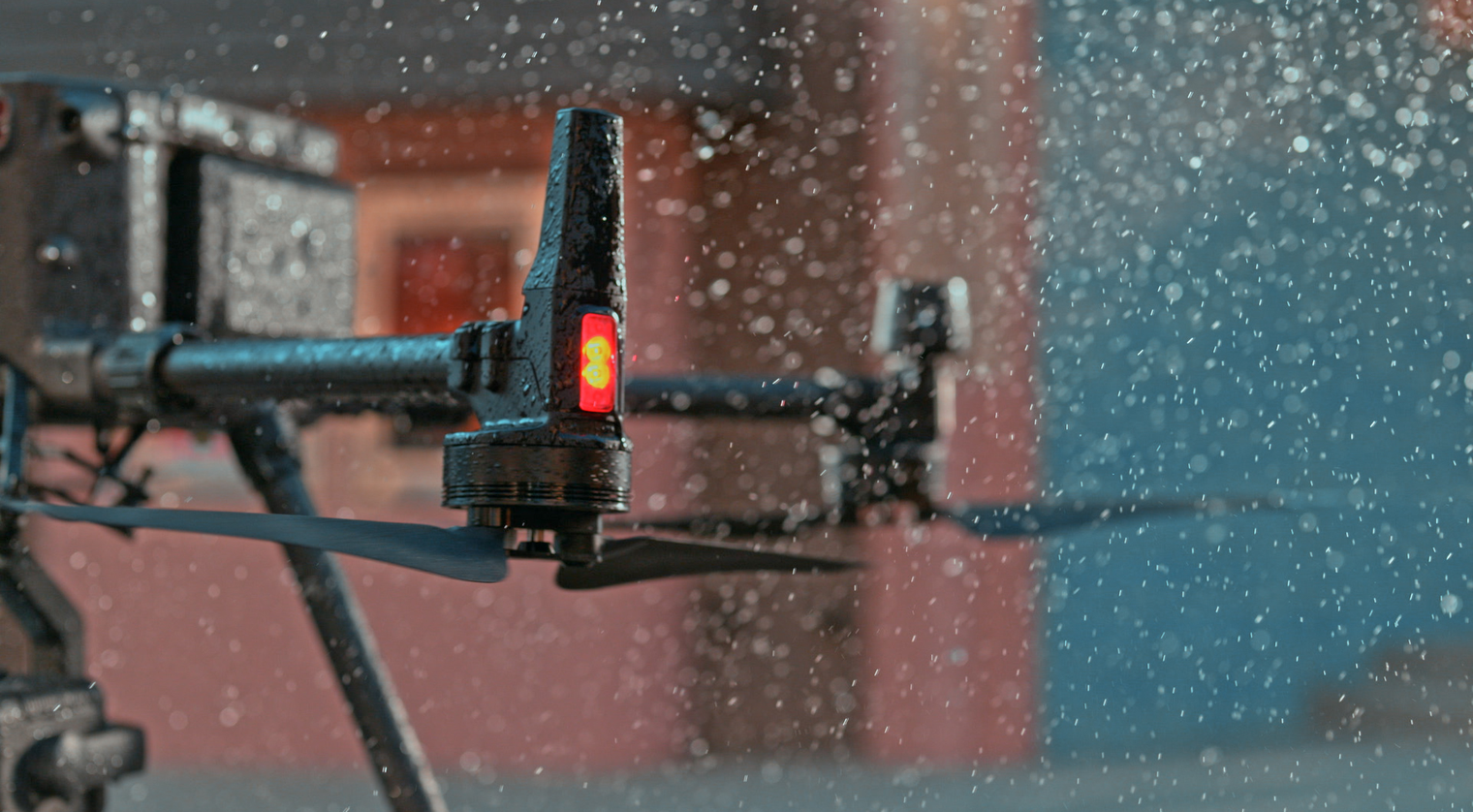
IP ratings indicate how resistant a drone is to dust and water exposure — and they’re one of the clearest ways to assess whether a specific model is suitable for flying in rain.
In this guide to flying a drone in the rain, we’ll explain what each digit in an IP code represents, why an IP rating doesn’t always mean 'waterproof', and which DJI drones currently have an IP rating. We’ll also share practical tips for flying safely in wet weather and what to do if your drone gets caught in the rain.
What is an IP rating?
IP stands for Ingress Protection. It indicates how resistant a product is to dust and water exposure.
An IP rating is shown as two numbers (e.g., IP55): the first relates to protection against solids like dust, and the second relates to protection against water.
The higher the number, the greater the resistance — but an IP rating doesn’t mean a drone is fully waterproof.
DJI drones and IP ratings: Can you fly in the rain?
The table below provides a list of DJI drones and their IP ratings.
If a model is unrated, it’s not designed for wet-weather operations and should not be flown in rain.
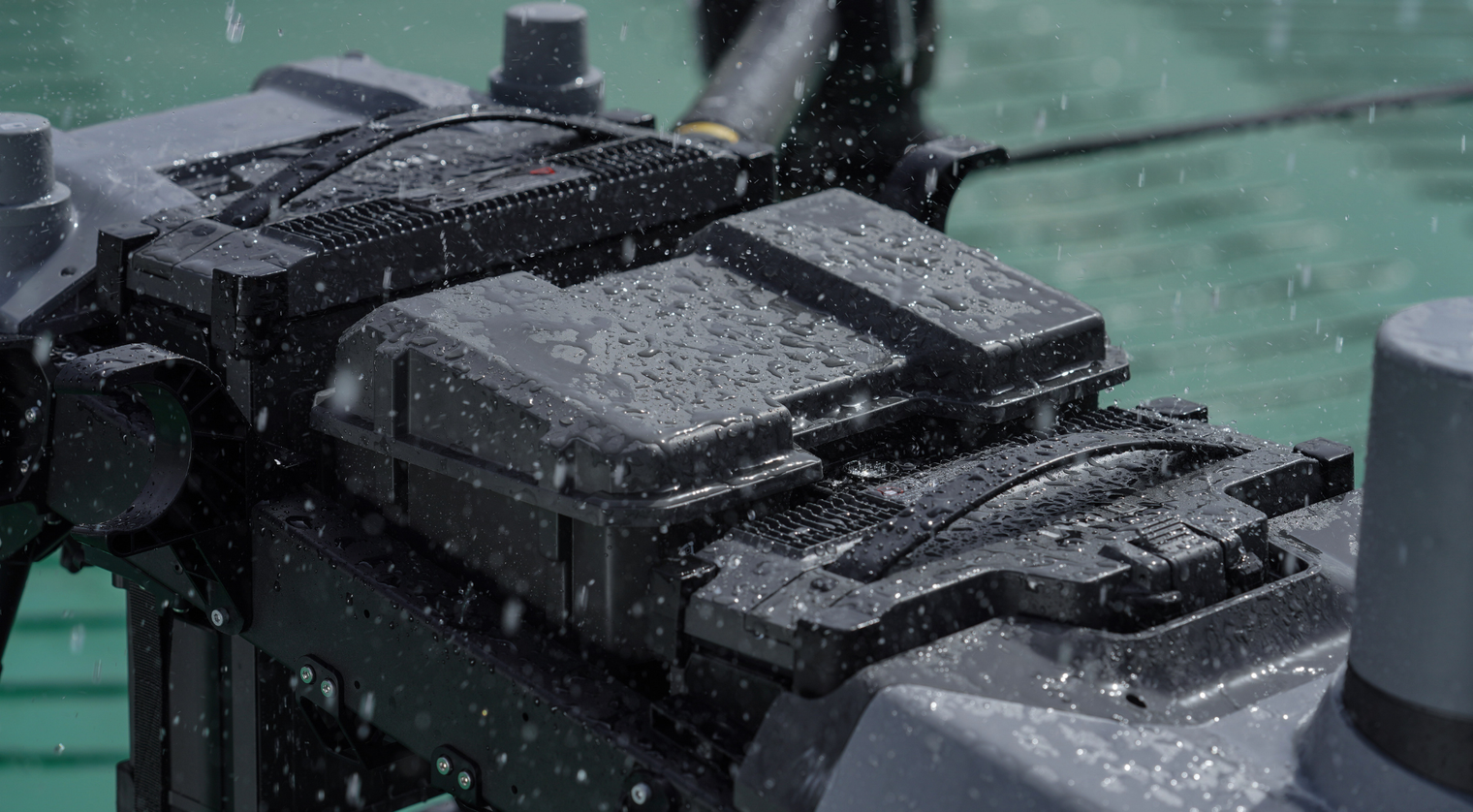
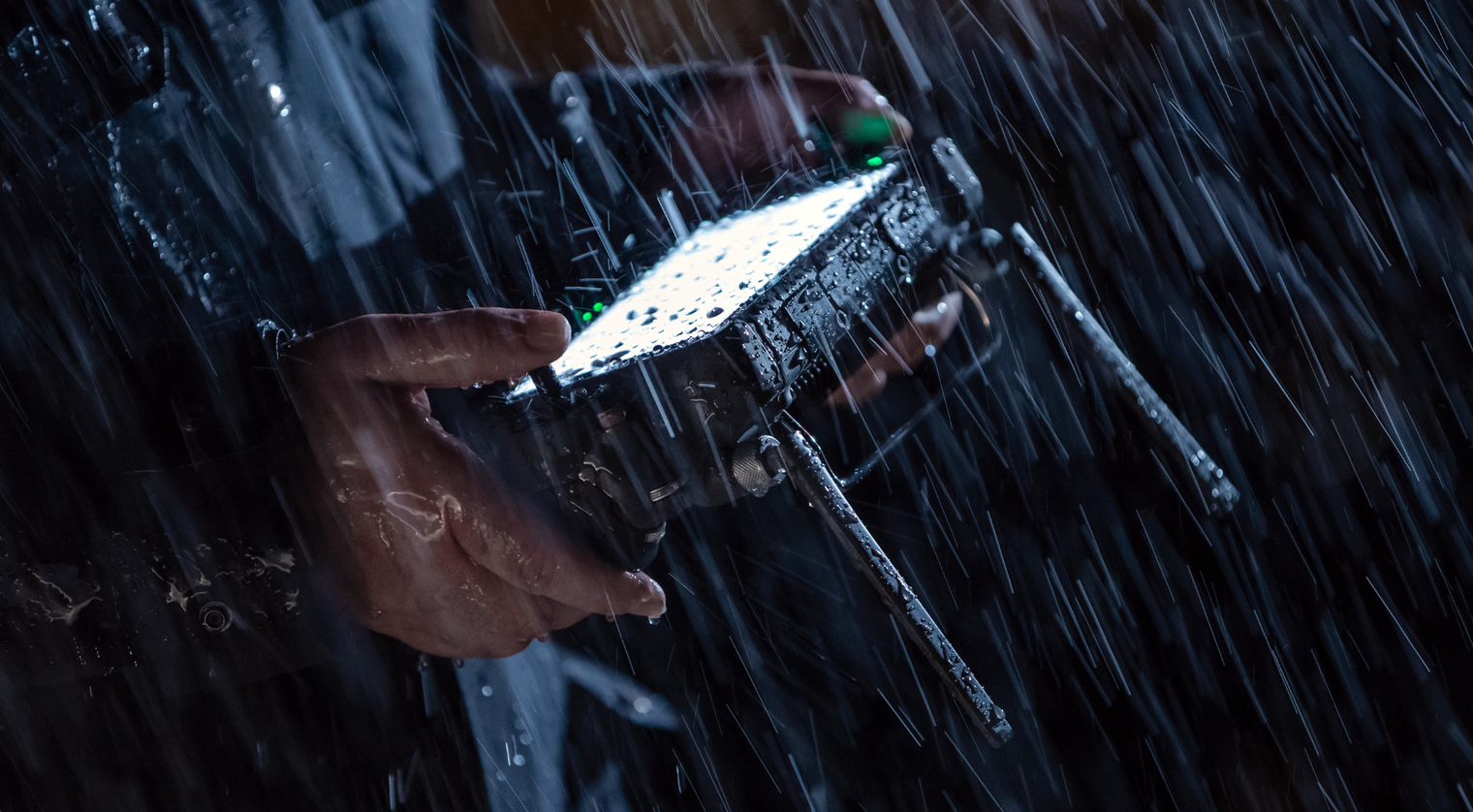
IP-rated drones are water-resistant — not fully waterproof. A general rule of thumb from DJI is not to fly its IP-rated drones when the amount of rainfall exceeds 100mm/24 hours.
| DJI drone | IP Rating |
|---|---|
| DJI M400 | IP55 |
| DJI M350 RTK | IP55 |
| DJI M300 RTK | IP45 |
| DJI Matrice 4 Series (Matrice 4E and 4T) | No |
| DJI Matrice 4D Series (Matrice 4D/4TD) | IP55 |
| DJI M30 Series (M30/M30T) | IP55 |
| DJI Mavic 3 Enterprise Series (M3E/M3T/M3TA/M3M) | No |
| DJI Matrice 3D Series (M3D/M3TD) | IP54 |
| DJI Dock 3 | IP56 |
| DJI Dock 2 | IP55 |
| DJI Dock | IP55 |
| DJI FlyCart 30 | IP55 |
| DJI Inspire 3 | No |
| DJI Mavic 4 Pro | No |
| DJI Mavic 3 (Pro/Classic) | No |
| DJI Air 3S/Air 3 | No |
| DJI Mini 5 Pro | No |
| DJI Mini 4 Pro | No |
| DJI Flip | No |
| DJI Neo 2/Neo | No |
| DJI Lito 1/X1 | No |
| DJI Avata 360 | No |
| DJI Avata 2/Avata | No |
For a guide about flying drones in the winter (including operating temperatures and wind resistance), read our in-depth guide to winter drone flying.
Or read our guide to flying a drone in the snow.
Are DJI drones waterproof?
No — DJI drones are not waterproof. Some DJI Enterprise models have an IP rating, meaning they’re tested for resistance to water ingress, but even these drones are not fully waterproof and shouldn’t be submerged or flown in extreme conditions.
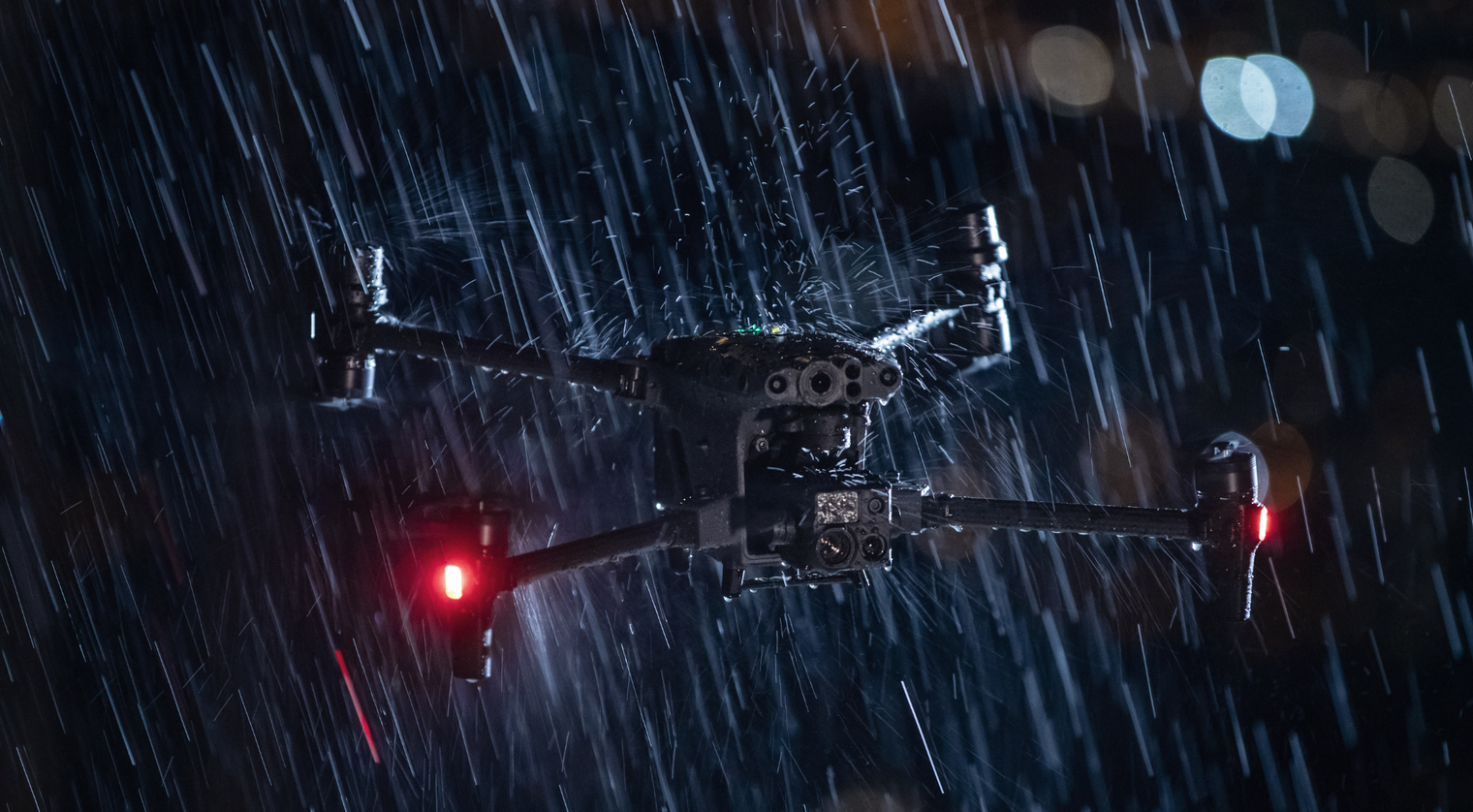
As mentioned before, drones without an IP rating should not be flown in the rain as they are not considered water-resistant.
What do IP ratings mean?
IP ratings - known as Ingress Protection or International Protection ratings - are defined to the international standard of EN 60529 (British BS EN 60529:1992).
An IP Rating consists of the letters IP followed by two digits and an optional letter. It classifies the degrees of protection provided against the intrusion of solid objects (including body parts like hands and fingers), dust, accidental contact, and water in electrical enclosures.
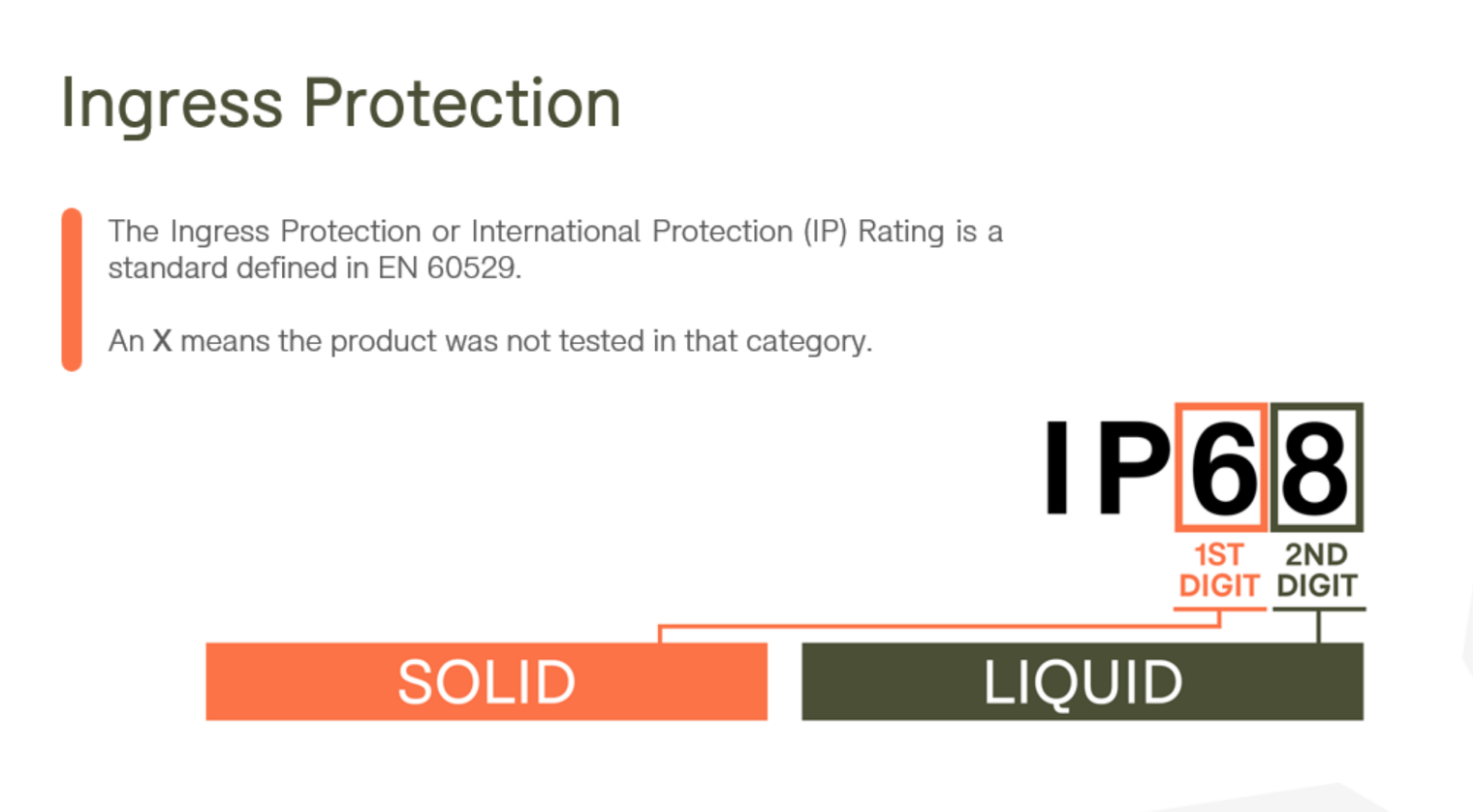
The aim of an IP Rating is to provide users with more detailed information than vague marketing terms, such as waterproof.
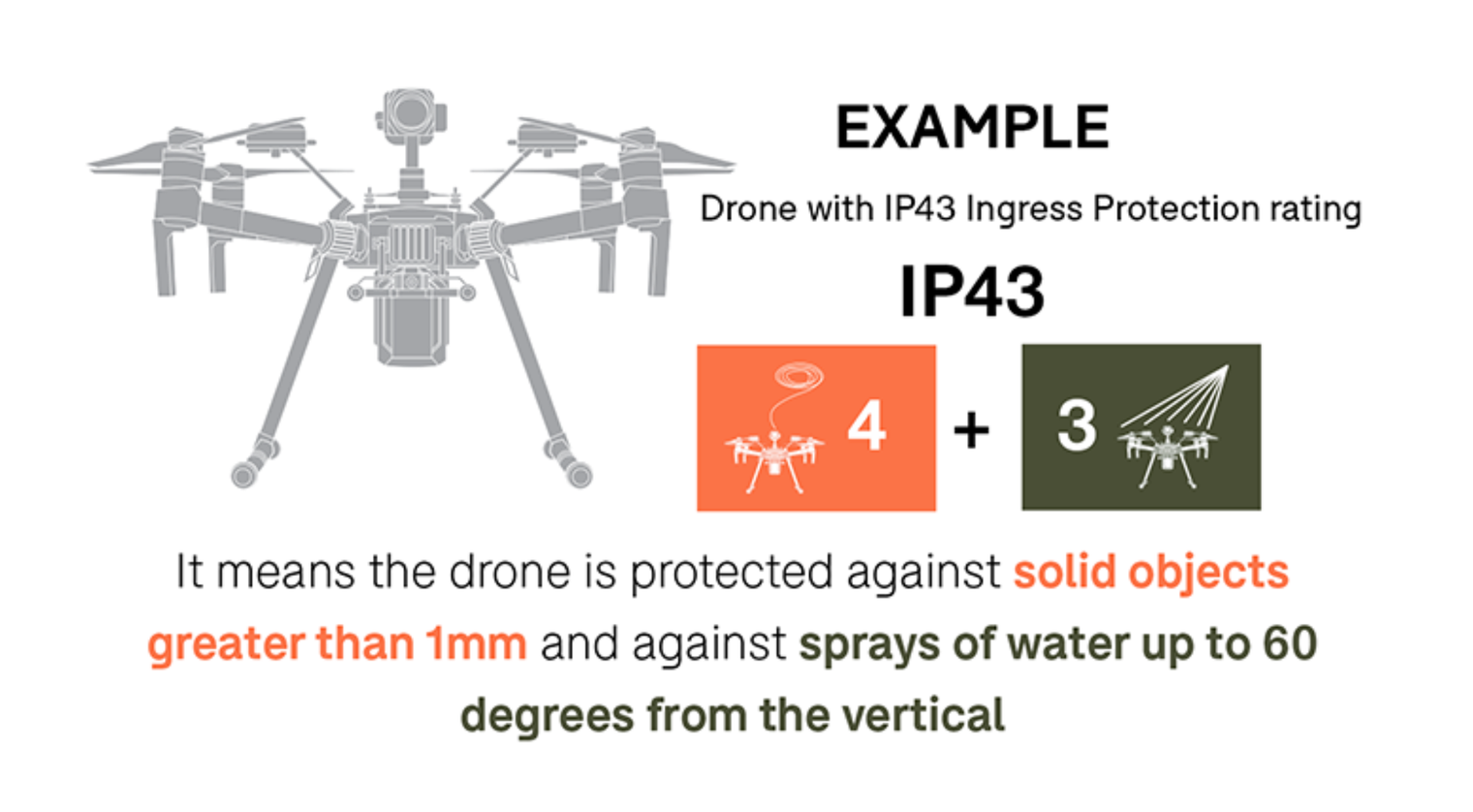
What do the two digits in an IP rating represent?
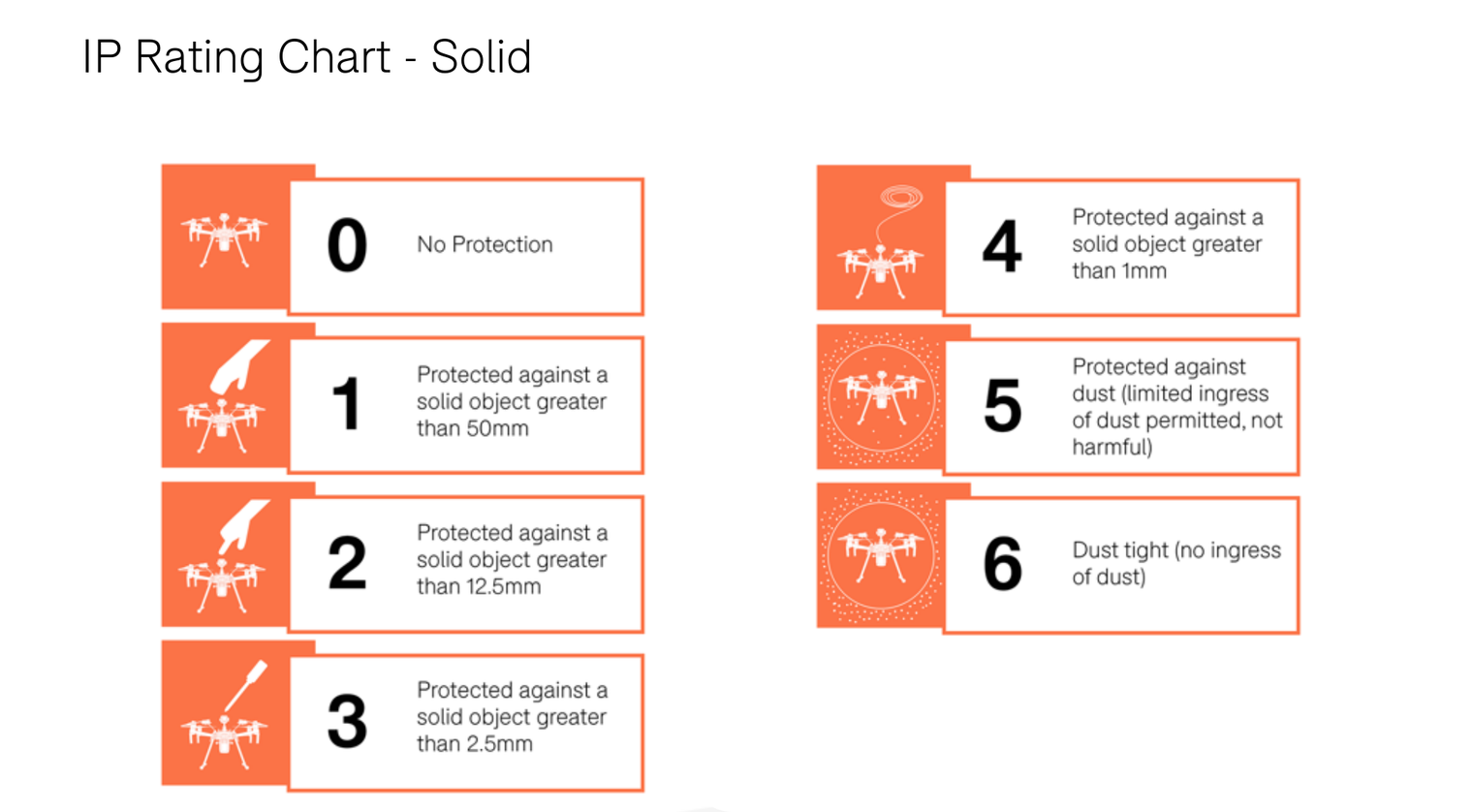
The first digit (such as IP65) indicates the level of protection that the enclosure provides against access to hazardous parts (electrical conductors, moving parts etc) and the ingress of solid foreign objects. The first digit will be a number between 0-6.
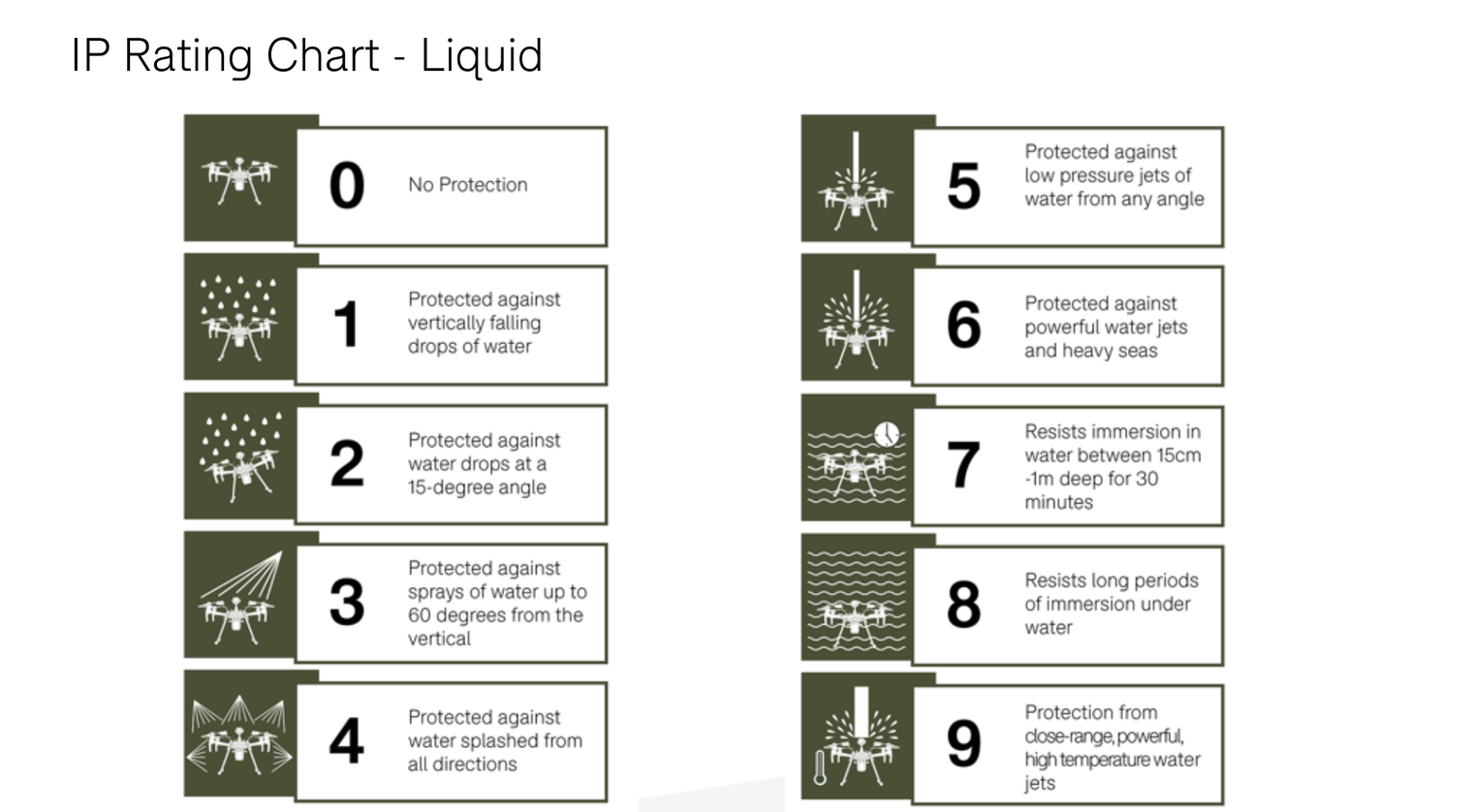
The second digit (such as IP65) defines the protection of the equipment inside the enclosure against various forms of moisture (drips, sprays, submersion etc). The second digit in an IP rating will be a number between 0-9.
In certain cases, an IP rating might be given as IPX7, IP5X, or similar. The X means the product has not been tested in that category.
In some cases, an additional letter may be at the end of an IP rating, e.g. IP67M. This is done to indicate either certified resistance to specific materials/hazards, such as oil or high voltages, or a particular scenario in which the IP testing was conducted (for example in moving water).
'K' as seen in some IP ratings mean that the enclosure must provide protection against ingress of directed water jets of high temperature and pressure.
Hints and tips for flying DJI drones in wet weather
There are certain tips to follow to ensure a drone performs well in the rain and snow.
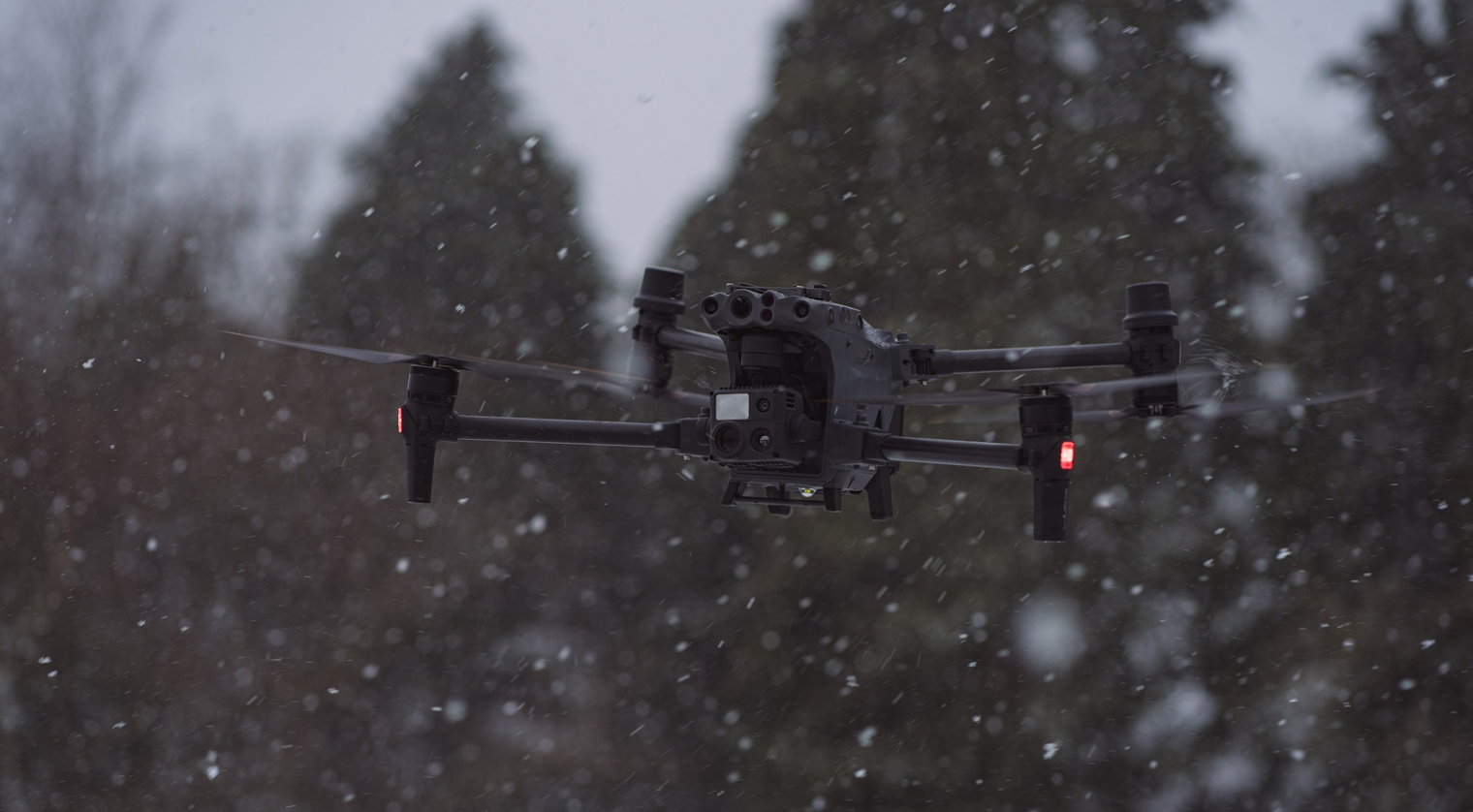
These include:
- Do not fold the frame arms in the rain.
- Ensure the battery ports, battery compartment ports, battery surfaces, and battery compartment surfaces are dry before inserting the batteries.
- Firmly attach the microSD card slot cover.
- Check that the waterproofing top shell plug is firmly attached to the top shell.
- Use the specific DJI batteries which are recommended for and compatible with the aircraft.
- Ensure the aircraft shell is not cracked or the waterproof adhesive is not aged or damaged.
- When it comes to payloads, ensure the gimbal port and gimbal surface are free from any liquid before installation.
- When using DJI Dock, ensure the electrical cabinet door and the dock cover are firmly closed and its waterproof adhesive is intact.
To talk about any of the drones mentioned in this article, or to see how heliguy™ can support your drone needs, contact us.
Frequently asked questions
Is it safe to fly a drone in the rain?
In most cases, you shouldn’t fly a drone in the rain unless it has an IP rating and the manufacturer confirms it can operate in wet weather. Most consumer drones are not IP-rated, meaning water can enter the aircraft and cause electrical faults, sensor errors or long-term corrosion.
Want the full guide? Read our detailed breakdown of flying a drone in the rain and IP ratings for DJI drones.
Are DJI drones water-resistant?
DJI consumer drones are not water-resistant and shouldn’t be flown in rain. Some DJI Enterprise drones have an IP rating for water resistance, but they are not fully waterproof.
Want the full guide? Read our detailed breakdown of flying a drone in the rain and IP ratings for DJI drones.
Which DJI drones can fly in the rain?
DJI drones with an IP rating are the safest option for flying in the rain. These are typically enterprise aircraft such as the Matrice series.
DJI consumer drones such as the Mini, Air and standard Mavic ranges are unrated and are not designed to be flown in rain.
Want the full guide? Read our detailed breakdown of flying a drone in the rain and IP ratings for DJI drones.
What does IP55 mean on a drone?
An IP rating has two digits. The first digit relates to protection against solids (like dust), and the second digit relates to protection against water. IP55 means the aircraft has strong protection against dust ingress and can resist water jets from multiple directions — but it doesn’t mean the drone is waterproof or safe to submerge.
Want the full guide? Read our detailed breakdown of flying a drone in the rain and IP ratings for DJI drones.
Can I fly a DJI Mini drone in the rain?
It’s not recommended. DJI Mini series drones are not IP-rated, and their lightweight design makes them more vulnerable to water ingress and sudden wind changes. Even light drizzle can cause moisture to enter vents and seams, leading to sensor faults or corrosion.
Want the full guide? Read our detailed breakdown of flying a drone in the rain and IP ratings for DJI drones.
What should I do if my drone gets caught in the rain?
Land as soon as it’s safe to do so. Then:
- Power off the drone.
- Remove the battery.
- Dry the exterior with a microfibre cloth.
- Leave the drone to air-dry fully at room temperature.
- Avoid powering it back on until you’re confident it’s completely dry.
- If you see warnings (gimbal errors, sensor faults) after drying, consider a professional inspection before your next flight.
Want the full guide? Read our detailed breakdown of flying a drone in the rain and IP ratings for DJI drones.
Is it safe to fly an IP-rated drone in heavy rain?
Even with an IP rating, heavy rain increases risk — including reduced visibility, strong gusts, and water pooling around seals and ports. IP ratings are tested under defined conditions, so you should still avoid extreme weather, fly shorter missions, and dry/check the aircraft thoroughly after landing.
Want the full guide? Read our detailed breakdown of flying a drone in the rain and IP ratings for DJI drones.