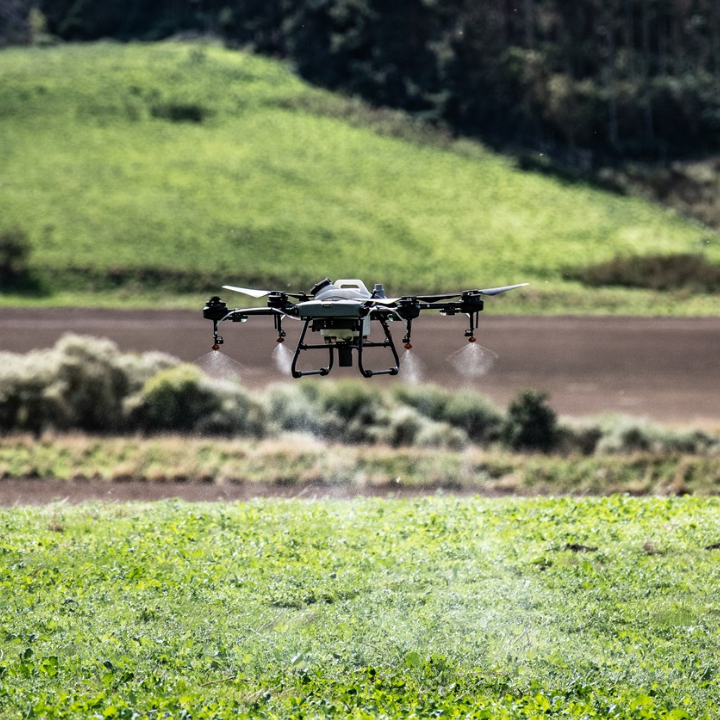
DJI Agras Drone Spraying Course
This multi-day training course helps pilots achieve the UK CAA-approved GVC and confidently operate the DJI Agras aircraft. Talk to an expert today.
Expert UK team · tailored advice · no obligation
Product dossier
Efficient and effective DJI Agras operations
Drone Spraying Course: Learning Outcomes
- DJI Agras platform:
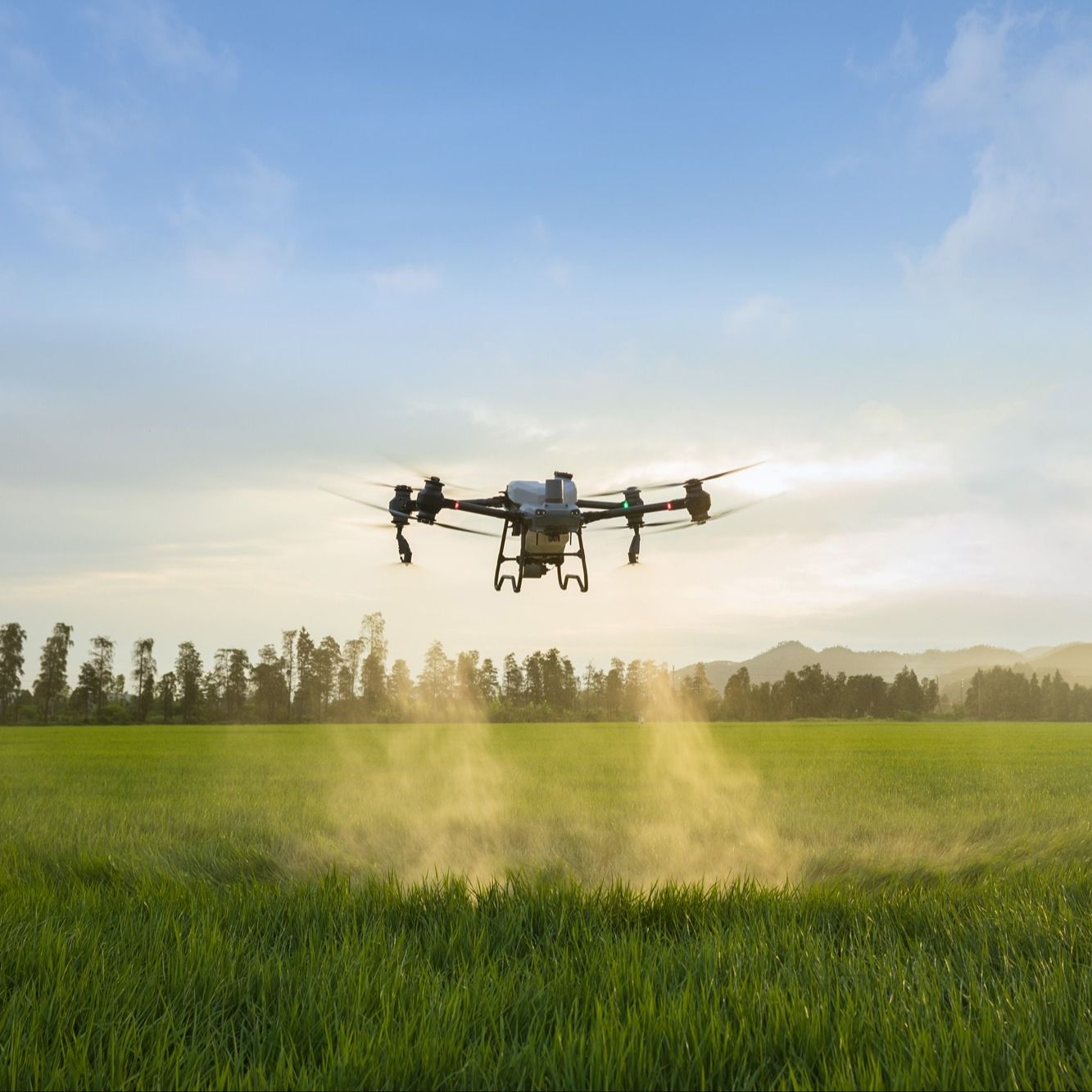
Understand the Agras system, including the spray tank, spreading module, and key components.
- Practical flight training:
Gain hands-on experience flying the DJI Agras platform and using its specialist functions.
- Chemical handling:
Learn safe chemical mixing, handling, licensing, and disposal procedures.
- Precision agriculture
Learn mission planning and spraying techniques for varied and uneven terrain.
- GVC fundamentals:
Build essential knowledge of UK drone regulations, flight safety, theory, and practical flying.
- RTK setup:
Configure and operate the D-RTK 2 Base Station for accurate positioning.
Full specifications
Manuals & documents
Frequently asked questions
What happens on completion of the Agras course?⌄
Candidates who pass the GVC will be able to apply to the CAA for an Operational Authorisation. They can then work towards an OSC, if required.
Drone Ag will provide candidates with a certificate, proving they are qualified to use the DJI Agras spray drones.
UPDATE - APRIL 2025: Please note that the Operating Safety Case methodology has now been replaced by UK SORA. To find out more, click here.
Where does the training take place?⌄
The course takes place at Drone Ag’s specialist agricultural facility in Northumberland (Old Bewick, Alnwick, NE66 4DZ). This provides the ideal backdrop to tailor your agricultural drone training.
Candidates will be required to book their own accommodation for the duration of the training.
How many pilots are needed for the course?⌄
Contact our training team to discuss course numbers. Our provision will be delivered in a way that ensures each participant receives a premium and tailored training experience.
What do pilots need to bring to the training?⌄
Pilots should bring suitable wet and cold weather clothing and suitable footwear for outdoor activities.
Do pilots need to bring their own drones to the course?⌄
heliguy™ and Drone Ag will supply drones for the training, but drone pilot teams are welcome to bring their own hardware/equipment to the session.
Is there a flight test during the training course?⌄
Yes, candidates will conduct the practical flight training aspect of the GVC during the course. The theory part of the GVC must be completed before attending the course.
Candidates will also be required to complete a DJI Agras-specific theory exam and practical DJI Agras training.
How long is the training?⌄
The course is a multi-day training course, designed to provide GVC and DJI Agras drone spraying training.
The maximum length of the course is five days (three days GVC, two days DJI Agras training), but this can be shortened depending on the number of candidates.
Please contact our training team to find out more.
Do I need an OSC for drone spraying in the UK?⌄
An OSC is required to conduct drone spraying/spreading. It is also required for operators flying the larger DJI Agras drones, such as the T50, T40, T30, and T25, due to their weight.
heliguy™ provides an in-house OSC consultancy to help candidates prepare for the submission to the UK CAA. Candidates are required to have a valid Operational Authorisation (from GVC) before they can apply for an OSC.
Separate costs for the OSC process apply.
UPDATE - APRIL 2025: Please note that the Operating Safety Case methodology has now been replaced by UK SORA. To find out more, click here.