Production has ended, but this platform is fully supported at heliguy — spares, rental, DJI-authorised service and training. Looking to buy new? See the DJI Mavic 4 Pro below.
50-day return policy⌄
- Return within 50 days of purchase.
- Full refund for unopened, sealed, unactivated items.
- Opened products may still qualify if unused.
- For orders over £100, we can arrange your return via DPD or in-person drop-off.
Next-day delivery — order before 3pm⌄
- Order before 3pm Mon–Fri for next-working-day delivery (free over £99).
- UK Saturday delivery available on orders placed before 3pm Friday.
- After 3pm Friday — dispatched Monday.
- Some UK regions may need 2–3 working days.
Discounted options with main purchase⌄
- Bundle pricing on accessories, spares and training when bought together.
- Reduced rates on add-ons selected at checkout.
- Ask us for a tailored quote on multi-unit or fleet orders.
Still supported here
Succeeded by DJI Mavic 4 Pro
Under 2 kg — an A2 CofC lets you fly as close as 30 m (or 5 m in low-speed mode) to uninvolved people.
Product dossier
Film high-quality content with ease
Pro-Level Filmmaking Drone
- Advanced Camera System:
4/3 CMOS Hasselblad camera with a dual-camera system, including an autofocus prime lens and a telephoto lens.
- High-Resolution Video:
Record in 5.1K at 50fps and 4K at 120fps; capture 20MP still images for detailed visuals.
- Enhanced Processing and Storage:
Apple ProRes 422 HQ encoding for superior video quality and a 1TB SSD for high-speed data storage.
- Extended Flight Time:
Up to 46 minutes of flight time for extended aerial coverage.
- Smart Features and Connectivity:
Includes a 28x hybrid zoom camera, compatibility with DJI RC Pro and DJI RC controllers, omnidirectional obstacle sensing, and the DJI O3+ upgraded transmission system.
Full specifications
Frequently asked questions
Compared with DJI Mavic 2, what major upgrades does Mavic 3 have?⌄
Compared to Mavic 2, Mavic 3 has substantially upgraded camera performance, integrating a 4/3 CMOS Hasselblad camera and a lightweight 24mm equivalent tele camera.
Mavic 3 is capable of capturing 5.1K/50fps and 4K/120fps videos, and Mavic 3 Cine supports Apple ProRes 422 HQ, Apple ProRes 422, and Apple ProRes 422 LT encoding, offering higher image quality and greater flexibility during post-processing.
In addition to the camera system, Mavic 3 also delivers a comprehensively upgraded flight experience.
Flight time has been extended to 46 minutes, and O3+ extends video transmission range.
Obstacle sensing has been developed into a truly omnidirectional system, with a more powerful APAS 5.0 and Advanced RTH to give users greater peace of mind during flight.
How many versions does the DJI Mavic 3 Series have and what are the differences between them?⌄
The DJI Mavic 3 Series comes in three versions: Mavic 3 Classic, Mavic 3, and Mavic 3 Cine.
Mavic 3 Classic has one 4/3 CMOS Hasselblad camera, and the gimbal does not support gimbal lock.
Mavic 3 has two cameras: In addition to a Hasselblad camera, it has a 162mm tele camera and supports gimbal lock.
On top of these Mavic 3 functions, Mavic 3 Cine supports Apple ProRes 422 HQ, Apple ProRes 422, and Apple ProRes 422 LT codecs and comes with a built-in 1TB SSD for high-speed data storage.
Does the DJI Mavic 3 Cine support the DJI RC-N1 Remote Controller?⌄
Yes, DJI Mavic 3 Cine does support the DJI RC-N1 remote controller.
Does the DJI Mavic 3 Series support the DJI Goggles Series and the DJI Motion Controller Series?⌄
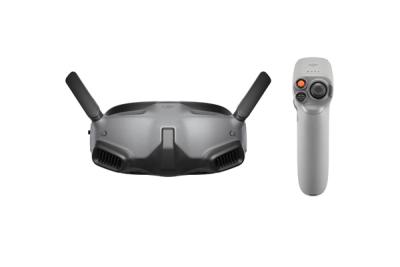
The DJI Mavic 3 Series is compatible with DJI Goggles 2, DJI Goggles Integra, and DJI RC Motion 2.
What advantages does the DJI RC Pro have compared with the DJI RC-N1?⌄
Compared with DJI RC-N1, the DJI RC Pro features:
Easy setup and quick start, which means the remote controller is instantly linked to the aircraft after powering on and there is no need to worry about interference from calls or text messages during flight.
The built-in high-bright screen ensures constant high-bright display all day, without the risk of lowered screen brightness caused by overheating.
DJI RC Pro is also integrated with a powerful processing platform for a more stable and smoother system operation. It also has excellent sound and image quality and supports video expansion output.
Dual-spring controller sticks for a smoother and more precise control experience.
Compared with the 1T2R antenna configuration of DJI RC-N1, DJI RC Pro uses a 2T4R configuration that is more resistant to interference and delivers more stable transmission performance in urban areas with signal interference.
A dial has been added to DJI RC Pro exclusively for camera parameter adjustments, supporting more customisable buttons for more convenient operation.
Compared with the previous generation, what upgrades does the onmidirectional sensing system on DJI Mavic 3 have?⌄
DJI Mavic 3 can detect obstacles in all directions with extreme precision, and multiple sensing cameras with a wider range of detection help Mavic 3 respond to obstacles earlier. In a well-lit environment, Mavic 3 can avoid obstacles faster and more smoothly, capturing stable footage safely even when flying laterally or backward.
What improvements does ActiveTrack 5.0 have compared with the previous version?⌄
ActiveTrack 5.0 tracks subjects in eight directions, bringing more creative possibilities. Embedded with the newest subject recognition technology, ActiveTrack 5.0 uses multiple vision sensors simultaneously to recognise a subject, differentiate it from other objects, and lock the subject in frame.
It allows users to adjust tracking angles smoothly for more natural results. Thanks to new environment and subject-sensing algorithms, Mavic 3 responds earlier to subject movements and environment information, and plans a more optimum tracking route in advance to record smooth and stable footage.
What improvements does Advanced RTH have compared with the previous version?⌄
Compared to the 20 metres of its predecessor, DJI Mavic 3 has a maximum forward-sensing distance of 200 metres during RTH. During flight, Mavic 3 will use advanced environmental sensing technology to determine the safest, most energy-efficient flight route to return the drone to its home point.